Reflections: Five years on from the COVID-19 pandemic
Five years ago our lives changed dramatically as the COVID-19 pandemic took hold. To mark the occasion Staff Matters caught up with a number of colleagues about the lasting impact it has had.
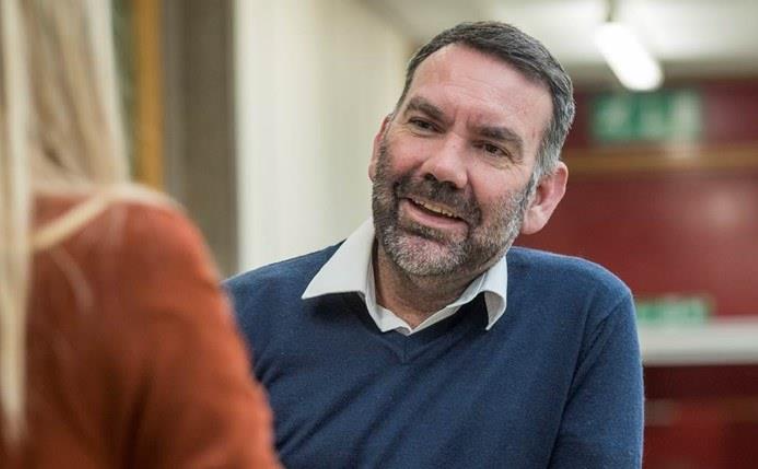
Nick Maguire, Professorial Fellow (Enterprise in Clinical Psychology)
It’s now five years since the onset of the COVID pandemic, and many firmly held assumptions about the way in which we worked were caused to be questioned—and many of them were found wanting. Five years ago, we held dear the interpersonal nature of meetings and reserved those online for international discussion via a little-known piece of software called Skype, or the new kid on the block, Zoom. Nobody had ever heard of Teams. We used to travel far and wide just for a meeting. We did small talk. We knew how tall or short people were. And dispensation to work from home? A complicated and often opaque process involving Discretion.
The world of home and work changed very, very rapidly in April 2020. Most of us were forced to work from home and bang saucepans for those who couldn’t—those who had to face the fear of what was then a frightening and little-understood phenomenon.
As the pandemic drew on, however, some of the fear gave way to complacency, not least from those responsible for The Rules. Hands, faces, and spaces were watchwords for some, ignored by others. We became teachers, small injuries medics, social workers, and inexpert in child anxiety. Some of us were better than others; the memory of asking my then 8-year-old why she didn’t understand some tricky maths problem still haunts me.
We watched our children grow with some trepidation. For many, it was a difficult and traumatic time. For others, it was a great way to avoid working beyond 1pm. Five years on, my then 8- and 11-year-olds are now teenagers. They’re not showing much in the way of negative effects of the pandemic, but who can tell through the fug of hormone-wracked and social media-exploited teenagerism?
For some of us, working at home was a liberating experience—away from the noise and distraction of open-plan offices and territory disputes over fridges, carefully marked-up milk, and desk space. Autonomy over time and space was valued; sensory overload all but eradicated. But for many, it was a really difficult time being away from colleagues, some who were friends. The social connectedness, the smiles and the laughter and the sharing. Community.
The work legacy for us all is an interesting one. How do we tension the autonomy and place of work that seems to suit us—whether at home, work, or both—with the needs of the institution? Humans generally thrive on social connectedness, and the loss of community can be keenly felt, even by those who perhaps think of themselves as averse to the idea. For many, the legacy of COVID is still unknown and terrifying.
So how do we as a community express ourselves and support each other in our own wellbeing and that of the institution as a whole? These are complex issues that do not have simple answers unless we default to a 60% diktat that seems to be favoured by many organisations. But if we look beyond that, we have learned some useful things about ourselves and our preferred ways of working. Through continued discussion, we may be able to create a situation in which the individual and the organisation are best served—with a bit of give and take, obviously.
Until then, my roles as super-gluer of small cuts (I saw it on TV once) and utterly mediocre maths tutor are, thankfully, over. Shame the tyranny of emails still endures.
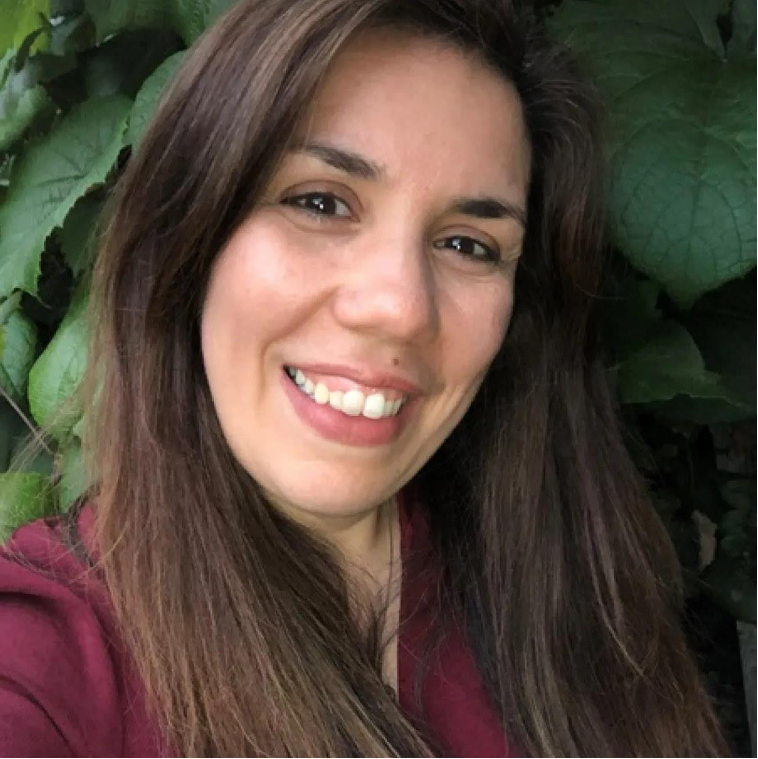
Professor Nisreen Alwan, Professor of Public Health
In March 2020, there was no public messaging about the long-term health effects of COVID infections. Long COVID emerged as a public-made term describing the lived experience of persistent symptoms and impact on everyday functioning following COVID in those not classed as ‘vulnerable’ to the severe effects of the infection.
Professor Nisreen Alwan was one of those with such experience. In July 2020, she wrote about it in the British Medical Journal from the perspectives of both her personal experience and her role as a public health expert, saying: “Death is not the only thing to count in this pandemic, we must count lives changed. We still know very little about COVID-19, but we do know that we cannot fight what we do not measure.”
The piece was translated into other languages and shared widely at the time. There was a clear gap in public health knowledge and awareness about the long-term effects of COVID. This is the message that Alwan persisted in sharing and advocating as a public health doctor: ‘Count Long COVID’. She actively contributed to the conceptualisation of the definition and quantification of Long COVID through engagement with national and international stakeholders.
Alwan has also been researching Long COVID—including its symptoms, triggers, and how it is experienced by different population groups. People with Long COVID widely experience stigma related to their condition, and such negative experiences can widen health inequalities.
She and her team explored why some people with probable Long COVID are not getting a diagnosis and therefore not receiving care and support. This included research focused on experiences of Long COVID in ethnic minority groups. To encourage people who may have Long COVID to seek care and support, and to raise awareness among professionals and the public of the effects of Long COVID stigma, Alwan and colleagues created the Supporting Long Covid Care webtool, which is available to access and use publicly.
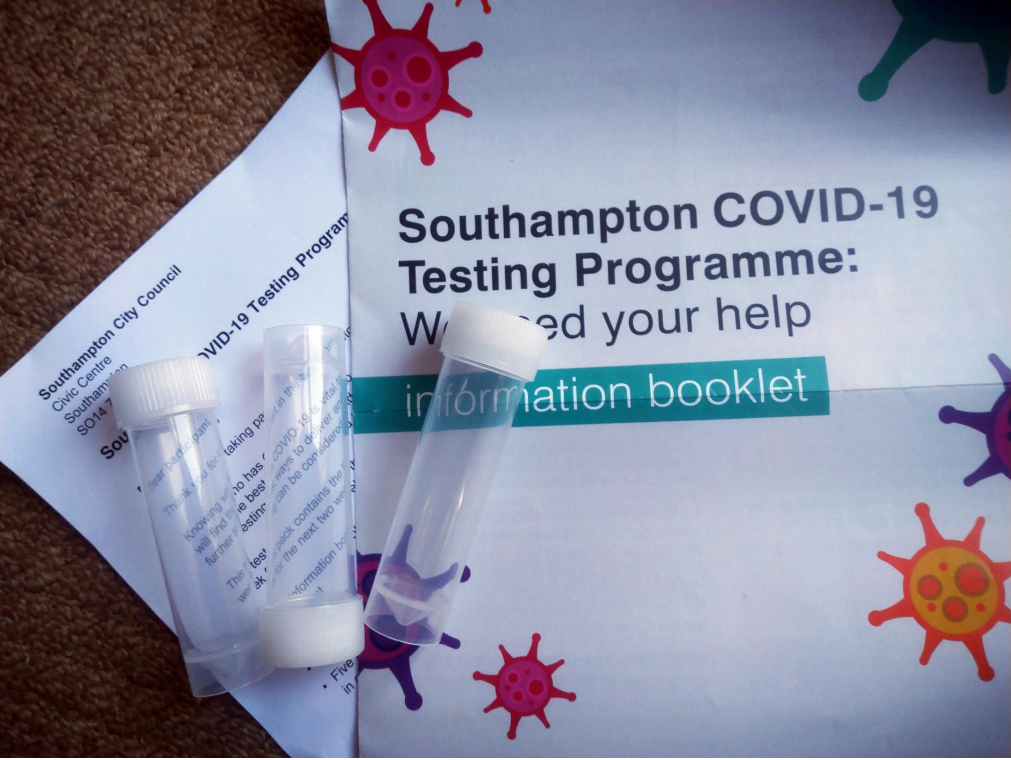
They also recently published analysis of NHS England national survey data that showed almost one in ten people in England think they may have Long COVID, and explored the different factors linked to such experiences.
To hear more about Alwan’s experience during the pandemic, you can listen to her TEDx Talk.
Emma Kerson, Senior Strategic Planning Manager, and George Giles, Senior Administrative Officer, discuss their experiences of Long COVID
What is your experience with Long COVID?
Emma: For me, Long COVID has truly lived up to its name; it will be four years in July since I first caught COVID. My symptoms have changed over time, and are mainly now fatigue, brain fog, and nausea. Fatigue is more than just being tired; my body constantly feels heavy and drained. Brain fog causes memory problems and slower processing speeds, making me forget what I’m saying mid-sentence. Concentrating on work tasks like spreadsheets can still make me feel nauseous.
I have been fortunate to have a lot of support. I learned to breathe properly and how to manage my fatigue at a Long COVID clinic. The University has been a supportive employer, and with Occupational Health’s advice and a very caring team, I was able to get back to full-time work over a period of two years.
There’s still so much not known about Long COVID. I don’t know if I’ll ever fully recover, and that’s something I have to come to terms with.
George: I first had a mild COVID infection in July 2021 that felt like a bad cold. However, some of my symptoms did not go after the initial infection. I have struggled since then with fatigue and brain fog, with spells of breathlessness. This reached a peak in April 2023, when I couldn’t get through a sentence without having to pause for breath, which led to me having to take around a month off sick from work. Since then, the breathlessness has improved, though the other symptoms remain.
At the moment I am feeling much better, and the main issue that I have is around other viral infections: every time I get one, it hits much harder and lasts much longer than it used to.
How has your life changed as a result of Long COVID?
Emma: Energy is like money; when you have it, you do not have to think about it. Now, I constantly monitor how I spend my energy on friendships, work, and home life. I have had to accept that I cannot do it all and need to slow down. For a while, my life felt dictated by what I could not do, but fortunately, my symptoms have improved over time. Compared to a year ago, I have more ‘energy to spend’ and a better understanding of what activities cost more.
George: The main thing has just been having to slow down and deal with the frustration and guilt from this. Family life has dramatically changed, and I have to be careful with how much I do with my wife and daughter to make sure I don’t crash afterwards. My career progression has taken a back seat to my recovery, and any extra energy I have is spent on my family time.
Another impact has been how much I drive, rather than walk or use public transport. Even short walks can be exhausting, and unfortunately, I have found the amount I use the car has increased significantly compared to pre-COVID.
What helps you to manage your condition?
Emma: The most important thing for me is regular rests, even for five minutes. I am fortunate my work allows me to work from home for much of the week, and if I am on campus, I can retreat into a staff room.
My personal game changer was taking a significant amount of iron through supplements. I saw some Cambridge University research, and even though my bloods showed I was fine, I felt a demonstrable impact from taking additional iron.
Earlier this year, a friend of mine who is a physiotherapist suggested trying some very mild strength training. I was really nervous that it would make me feel worse, but I reprioritised my energy and am so glad I gave it a go. I have never been as weak as I am now, but it felt so empowering to feel like my body could ‘do something’—even if it was lifting the lightest metal bar a couple of times.
And to be honest, having other Long COVID sufferers to talk to really helps me feel not alone in it.
George: My family and friends have been amazing. I am very lucky to have a good network around me to help or just to talk to when I’m having a bad day.
I was with the Southampton Long COVID clinic until I was discharged last year (I am currently trying to be re-referred following a setback), and they were very useful. One of the best things that came out of my sessions with them was the idea of pacing and trying to keep activities that I enjoy. I am a keen cook but struggled to stand at the stove for long periods, so we came up with the idea of a stool I could perch on while cooking. £10 on Facebook Marketplace later and now I rave about my cooking chair to anyone who will listen!
In terms of work, I have found longer meetings are a struggle and having meeting recordings has been very helpful. I am much more conscious of taking regular breaks and writing to-do lists to ensure that nothing gets lost.
What is your advice to managers and colleagues on how to support others with Long COVID?
Emma: Read about “Spoon Theory”. It illustrates all the thinking that goes on behind the scenes with a condition like Long COVID.
I would also say please keep checking in. It is incredibly isolating, and everything may look fine, but some days are worse than others. Allowing space for those five-minute rests makes a big difference.
If you have a bug, I would recommend keeping a distance from someone with Long COVID. If I get ill with a common cold, I can be wiped out for weeks.
George: Long COVID is incredibly frustrating—not just as a long-term health condition, but because of how little is known about it and the lack of significant research. A little understanding and flexibility from management can go a long way. The last thing people with Long COVID need is to be worrying about how many days they “need” to be in the office that week, or if another day off sick would get them in trouble.
I have always been very open and honest with my colleagues around my struggles but, as with any health condition, there may be people who are not comfortable discussing these things. As with my home life, I have an extraordinary amount of guilt for any work I may have had to pass on or anything that may have needed to be covered in my absences, and have been incredibly grateful for the understanding I’ve received from my team.
If you’re experiencing Long COVID and need work adjustments, please speak to your line manager. You can also join the University’s staff disability network for a supportive place to discuss your experience with Long COVID.
Neil J. Gostling, Associate Professor (School of Biological Sciences)
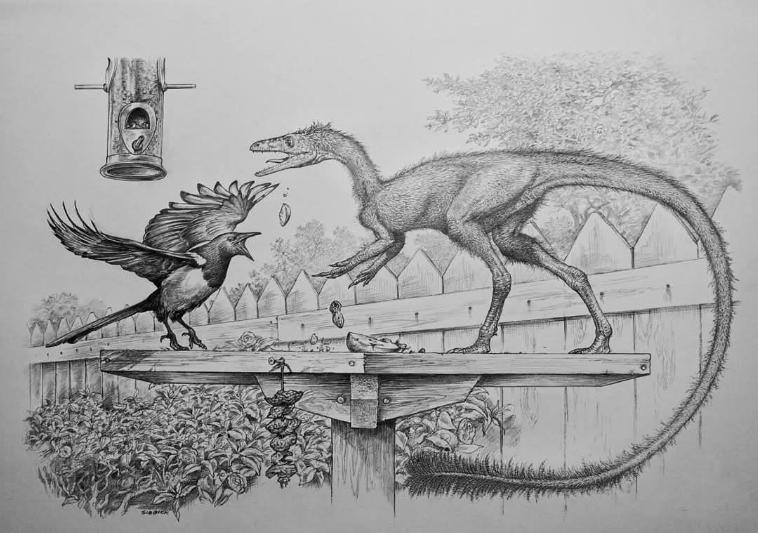
During COVID, I got up to all sorts—the main thing was that I started a Facebook group called The Dinosaur on Your Window Sill.
With lockdown, it was difficult to engage with anything, but nature found a way in. My wife and I started The Dinosaur on Your Window Sill to try to get people to look at the world around them. Birds are dinosaurs, so having them hop onto your windowsill was a way to engage with nature, but also to prompt wider questions about nature and science.
Five years on, we have 5,500+ people from around 50 countries. We talk about everything from astronomy to zoology and engage with all age groups as parents introduce them to the group. It’s a safe and friendly corner of the internet! Through The Dinosaur and PERu we have done videos through the University’s YouTube channel. Darwin’s Armchair came together as Sarah Darwin and I discussed aspects of evolution with friends and colleagues and brought science into people’s living rooms.