Advances in space research
UK Space Agency chief visited Southampton to spotlight space research and new investment
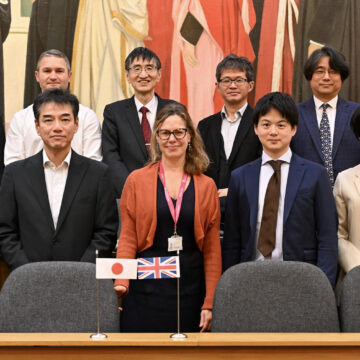
On 12 December 2025, UK Space Agency Chief Executive, Dr Paul Bate, visited the University alongside partners from Space South Central, meeting researchers, students and regional innovators, as part of the new research funding awarded to the university through the UK Space Agency’s National Space Innovation Programme (NSIP). The day’s programme included briefings on the University’s Southampton Space Strategy and Action Plan and the JUPITER joint small-satellite programme, as well as tours of the Optoelectronics Research Centre and the space quantum laboratory on Highfield Campus. An SME roundtable at Chilworth Science Park showcased regional strengths and opportunities for growth.
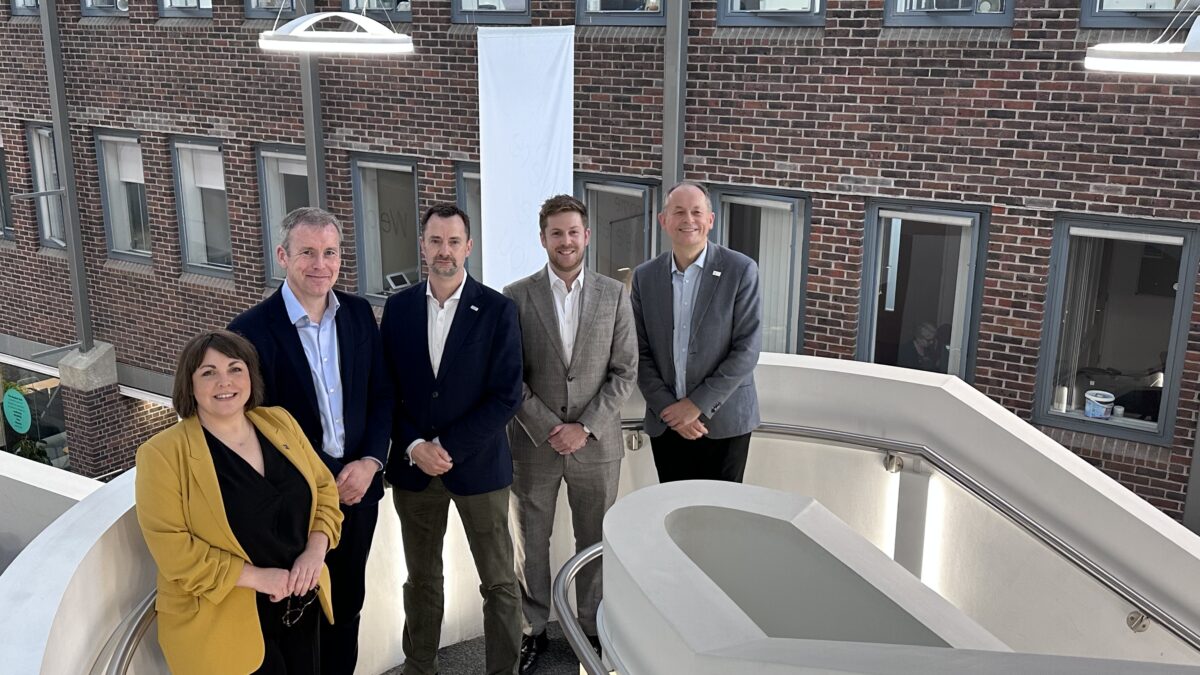
The visit coincided with the University’s latest research investment: the creation of the Southampton Space Institute, a cross-University initiative designed to coordinate space education, research and innovation, strengthen industry links and accelerate translation, from photonics and quantum sensing to Earth observation and space propulsion. The Institute will underpin priority actions such as new facilities, in-orbit demonstrators and international partnerships, ahead of a formal launch planned for the spring.
We will feature the launch of the Southampton Space Institute in a future edition of Staff Matters.
Southampton secures UK Space Agency funding to advance Space Sustainability
The University has been awarded significant funding through the UK Space Agency’s National Space Innovation Programme (NSIP), reinforcing our position as a national leader in space sustainability and innovation. The total awarded value from UK Space Agency is £813k, and the total project value is £1.286M, which includes match funding from the University and project partner (Cranfield Plasma Solutions).

This investment will drive the development of an advanced plasma torch system, a cutting-edge technology designed to enable realistic re-entry testing here in the UK. Such testing is essential for understanding how spacecraft behave during atmospheric re-entry, helping to ensure safer and more environmentally responsible disposal of satellites and other space hardware.
Professor Minkwan Kim from the Department of Aeronautical and Astronautical Engineering within FEPS, who leads the research project commented: “Securing this funding from the UK Space Agency NSIP programme marks a significant achievement that strengthens the University’s position as a national leader in space sustainability. The development of our advanced plasma torch system represents a critical step toward enabling realistic re-entry testing in the UK and supports our long-term commitment to sustainable and environmentally responsible space operations.”
The NSIP initiative is part of the UK Space Agency’s broader strategy to foster innovation and maintain the UK’s competitive edge in the global space sector. By supporting projects like this, the programme aims to accelerate technologies that address key challenges such as orbital debris and sustainable mission design.
Share this article to social media: