Recognition for language learning research project
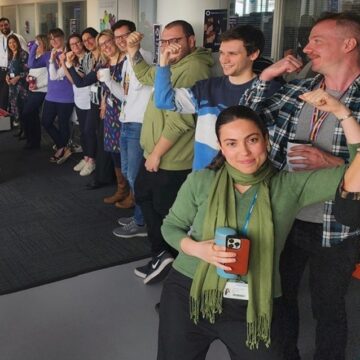
The Digital Empowerment in Language Teaching (DELTEA) project, a partnership between the University of Southampton and the University of Reading, has won the 2025 British Educational Research Association (BERA) Public Engagement and Impact Award.
DELTEA addressed the urgent challenge of the low status of foreign languages in UK primary schools, offering an evidence-based approach that simultaneously supports teachers and pupils. The project delivered a research-informed digital professional development (DPD) programme for teachers, a linked classroom intervention using digital stories combining images, sound and print, and a phonics-AI app, a scalable MOOC as well as a toolkit to support sustainable, wide-scale adoption of best practice across the UK and beyond.
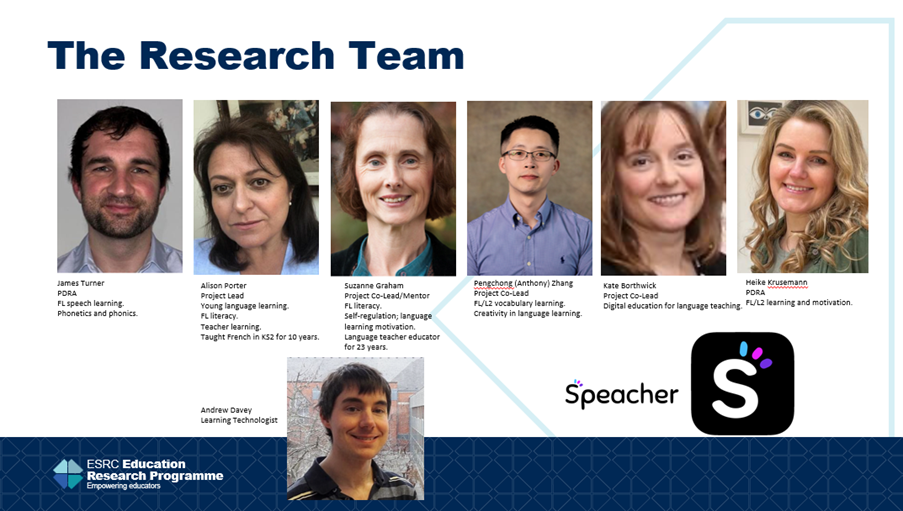
DELTEA Project Lead Dr Alison Porter, Associate Professor and Deputy Head of School Research and Enterprise in the School of Humanities, commented: “DELTEA has found that digital tools have huge potential to support teacher professional development and children’s learning. We’ve also found that when young learners engage with rich, multimodal linguistic resource and are encouraged to explore foreign language texts, their levels of creativity (problem-solving, perspective-taking and imagination) increase significantly. In other words, learning a foreign language in school using our pedagogic approach showed considerable linguistic and non-linguistic benefits. Particular thanks go to our LCL language teaching colleagues who narrated the DELTEA stories which are currently being used across the UK.”
Deltea Key Achievements & Impact
- Empowering teachers: Teachers who completed the DPD programme reported significant increases in autonomy, competence and motivation — gaining confidence in teaching literacy, creativity, and intercultural understanding, and feeling part of a renewed professional community.
- Transforming learning: Over 500 pupils in intervention schools — compared with control schools — showed statistically significant improvements in vocabulary, reading comprehension, creativity, the ability to read aloud (phonological decoding is a crucial skill in learning to read an alphabetic language), and general engagement. The approach proved inclusive, with no disadvantage observed for English as an Additional Language (EAL) or SEND pupils.
- Wider reach and influence: DELTEA’s work informed national policy discussion, including evidence contribution to the All Party Parliamentary Group (APPG) Education “Loss of the Love of Learning (LoLoL)” report and presentation of findings to the Department for Education’s Curriculum & Assessment team. The free MOOC has already attracted participants from 80 countries, broadening access to evidence-based foreign-language teaching, creativity and empathy-focused pedagogy.
- Sustained public engagement: DELTEA embedded public engagement: teachers co-designed the intervention, contributed to MOOC content, and helped refine resources; pupils provided feedback on learning and resource design; and findings were shared through blogs, webinars, CPD sessions, conferences, and public-facing articles, creating two-way dialogue between researchers, educators, learners and policymakers.
Further information on the DELTEA project.
Share this article to social media: