International research explores links between food insecurity and mental health
Researchers from the Institute for Life Sciences (IfLS) and the Sustainability and Resilience Institute (SRI) have published a new research paper, which highlights the link between food insecurity, and adverse physical and mental health outcomes in South Africa.

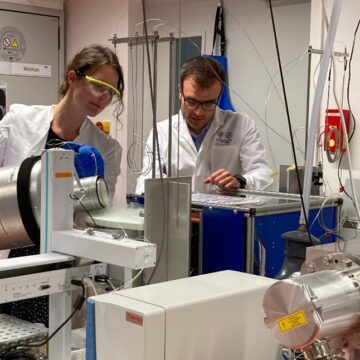
Working in collaboration with University of the Witwatersrand, Johannesburg, and led by Dr Olatundun Gafari (pictured left), Lecturer in Public Health and Equity lead for the NIHR Southampton Biomedical Research Centre, the research, which received interdisciplinary seed funding support from the IfLS and SRI, establishes that being from a food-insecure household more than doubled the odds of experiencing multimorbidity, depression and anxiety.
Olatundun explains, “In South Africa, food insecurity continues to remain a significant public health challenge, affecting around 34% of households. This problem is further exacerbated by structural vulnerabilities, including high levels of inequalities, high unemployment rates, poor access to healthcare services, rising cost of living and the slow recovery from the COVID-19 pandemic.
“Although previous studies highlight the role of food insecurity in the relationship between socio-economic disadvantage and poor mental or physical health, evidence from low- and middle-income settings remains limited and often doesn’t capture the complex vulnerabilities and coping strategies households adopt when food is scarce.
“Our research which involved a nationally representative sample of over 3,000 adults across the nine provinces of South Africa examined the complex relationship between food insecurity, coping strategies, social vulnerability and physical and mental health. We show that food insecurity accounts for around 60% of the total association between socio-economic status and depression, and about 88% of the association between socio-economic status and multimorbidity.” These findings have important public health implications. Prioritising policies and interventions that address food insecurity particularly among low socio-economic populations may help reduce the growing burden of multimorbidity, anxiety, and depression in South Africa.”
Professor Mary Barker, Deputy Director of the IfLS, said, “These findings form part of a broader programme of work currently in development that will explore how climate-driven shocks affect nutrition and health in South Africa. Our long-term collaborative relationship with University of the Witwatersrand facilitates these international interdisciplinary research projects and is very important to us at Southampton.”
The paper has been published in the PLOS ONE journal, and contributors include Professor Craig Hutton Director of the SRI, Professor Shane Norris and Duncan Hornby, University of Southampton, and Ashleigh Craig and Khuthala Mabetha, University of the Witwatersrand.
For more information and to join or collaborate with our institutes please contact ifls@soton.ac.uk and sri@soton.ac.uk
Share this article on social media: