
NSS and Survey Fortnight:
A community-wide effort for a shared goal
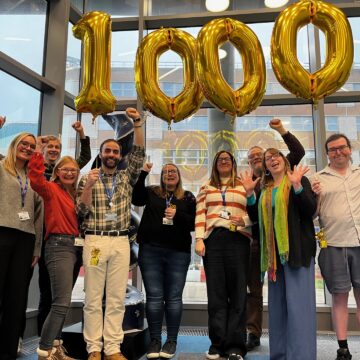
Survey Fortnight (5-19 February) is in full swing – a great opportunity for our community to come together, have meaningful conversations, and encourage our students to engage with the different surveys available to them. This includes the National Student Survey (NSS), a key survey that is instrumental to both our progress as an institution and to making sure that we honour our commitment to our students.
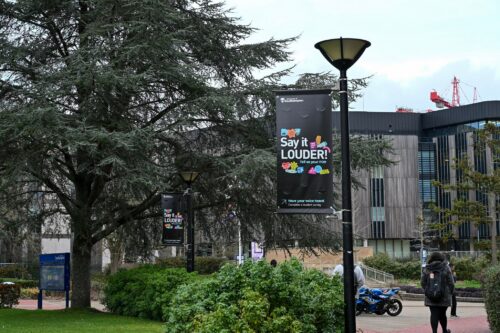
As a result, our campuses have been a hive of activity – from banners and campus assets to in-person pop-ups, student ambassadors talking to their peers on the Redbrick and in lecture theatres, and events happening in individual departments, this fortnight is all about conversation.
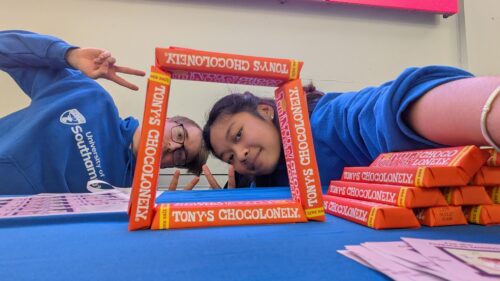
Read on to find out more about survey activity, including how colleagues in Psychology and Physiotherapy have boosted the NSS response rates in their areas only a few days after Survey Fortnight launched.
A coordinated approach
For the third year in a row, Student Experience and Engagement (SEE) have been leading the core operation of Survey Fortnight. This has two aims: to encourage students to engage with the NSS and other student surveys, and to support student-facing staff members in having productive conversations with students and driving response rates for each subject area.
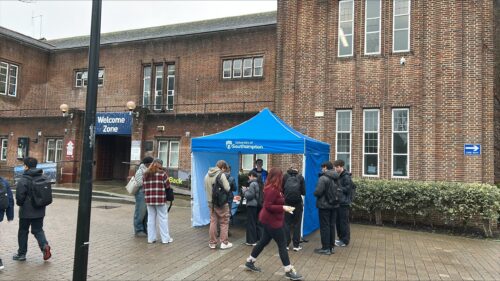
Since they were first introduced in 2024, student survey pop-up stands have been an effective way to get students involved with the surveys available to them. During Survey Fortnight, SEE staff members and student ambassadors are delivering over 20 separate pop-ups across Highfield Campus, Avenue Campus, NOCS, Boldrewood Campus, and Winchester School of Art, with presence at the Welcome Back Fair and the upcoming Careers Fairs.
Depending on their year or level of study, students complete the survey relevant to them on their phones, show their confirmation that the survey response has been submitted, and receive a survey incentive.
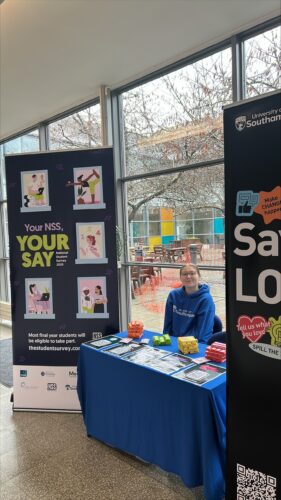
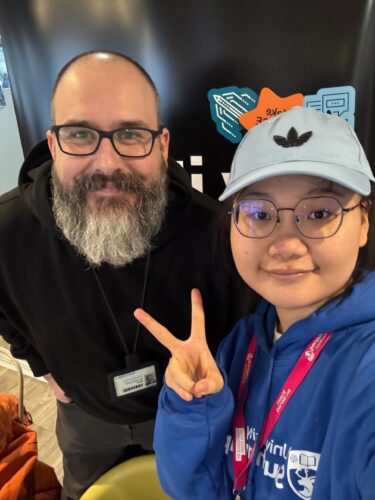
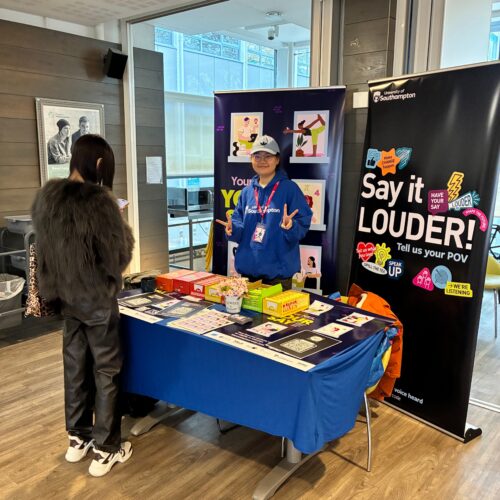
To maximise student involvement during Survey Fortnight, the team have also prioritised supporting student-facing staff and academics in surpassing the desired threshold of 50% of eligible students completing the NSS in their respective areas. They have delivered a staff toolkit with accessible information, assets, and incentives, as well as engagement and event support to staff members looking to design activities tailored to their subjects.
This aligned perspective, combined with the tailored approaches from different areas, continues to be a real strength, and has already led to an institution-wide response rate of over 30% in NSS shortly after launch, with 17 courses having surpassed the 50% threshold (as of Wednesday 11 February) and many others well on their way.
Kelly Holder, Director of Student Experience and Engagement, said:
“The way colleagues across the University have come together to deliver Survey Fortnight shows what is possible when we take a coordinated, student-centred approach to feedback.
Last year’s record NSS response rate and improvements in student satisfaction demonstrated the impact of this collective effort. This year, we have built on that learning to make it easier for students to take part and to ensure their feedback continues to inform meaningful improvements to their experience.”
Case studies from Psychology and Physiotherapy
Staff Matters caught up with Nicholas Kelley, Lecturer in Social Psychology, and Lindsay O’Connor, Programme Lead for BSc and MSc Physiotherapy, to find out more about how their tailored approaches boosted their NSS response rates.
Psychology
Colleagues in Psychology have used their expertise to design a campaign informed by established psychological theory on motivation, emotion, social identity, and reward, to create conditions in which participation felt worthwhile, meaningful, and socially valued.
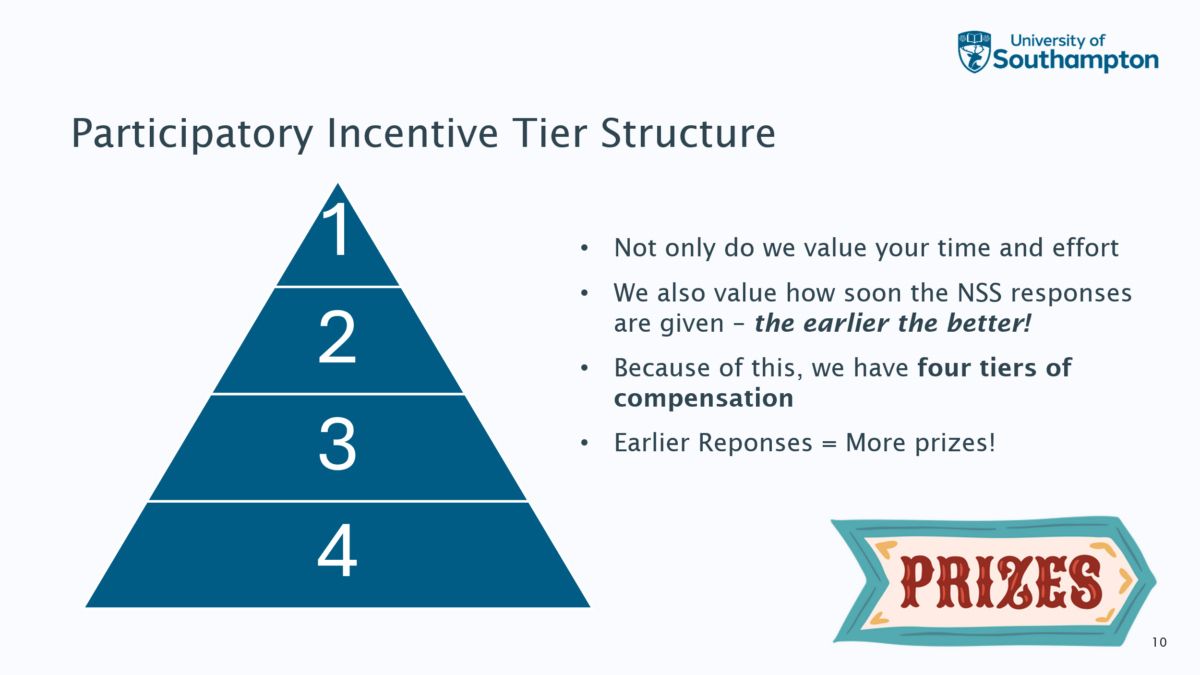
The campaign activity combined visible in-person engagement, immediate low-effort opportunities to complete the NSS, and a tiered reward structure. This involved offering snacks with QR codes linking directly to the NSS, alongside short reminders about the purpose and impact of the survey – paired with a tiered incentive system that rewarded early participation (for example, a limited-prize for the first 50 students to complete the survey, followed by a different prize for the top 100 respondents). They also ran a cohort-level challenge, setting a clear participation target and unlocking a mystery prize if the group reached it, which framed NSS completion as a shared community goal.
Nicholas Kelley, Lecturer in Social Psychology, outlined their science-grounded approach:
“As psychologists, we were aware that NSS responses can be shaped by well-known psychological biases, particularly the tendency for negative experiences to carry more weight than positive or neutral ones. As a result, students who have experienced frustration are often already highly motivated to take part, while those with broadly positive experiences are less likely to engage, leading to an unbalanced expression of the student voice.
“Alongside the rewards, we explicitly communicated how previous student feedback had led to tangible changes in the programme, emphasised that participation was voluntary and respected students’ time, and made the entire process highly visible (physical raffle tickets, a visible raffle box, face-to-face interaction). The aim was to reduce barriers, create positive momentum early, and broaden participation – meaning the NSS now feels more representative of the whole cohort and better reflects the high-quality teaching and support colleagues in Psychology have been delivering for many years.”
In 2025, Psychology reached a 72% NSS completion rate across their courses, and are already at 45% for 2026, with only 10 students left to complete the survey in order to reach threshold.
Physiotherapy
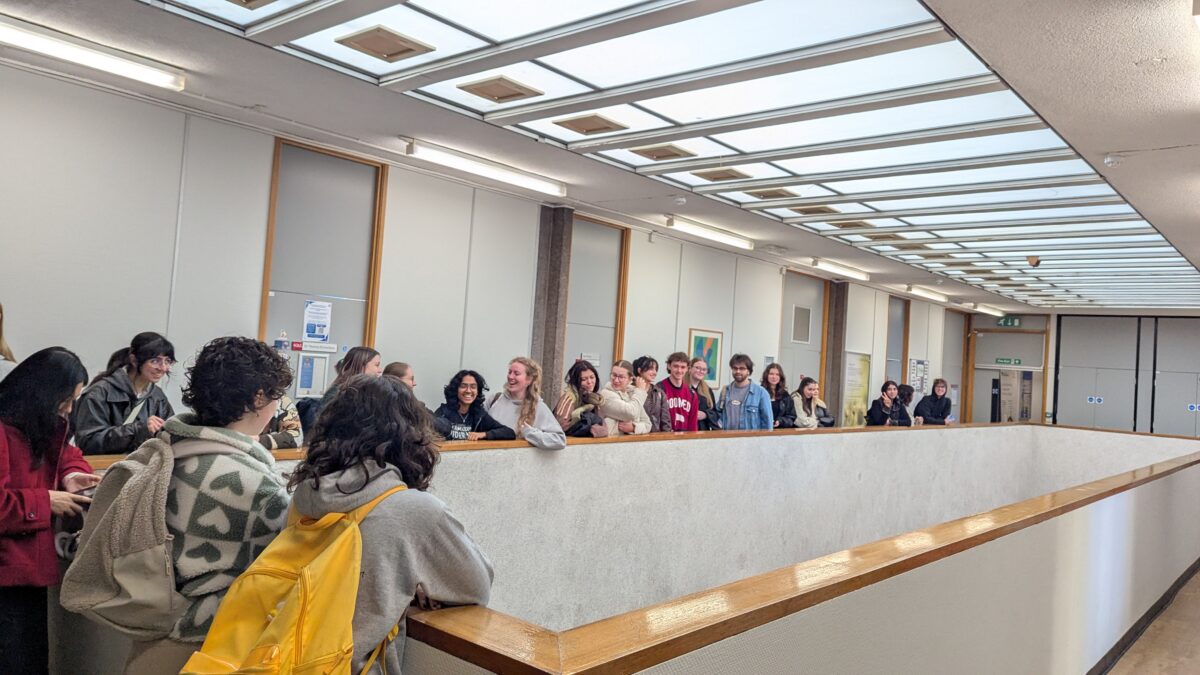
Due to third-year Physiotherapy students starting placements mid-February, colleagues in Physiotherapy delivered their NSS activity earlier than the official Survey Fortnight. They introduced the NSS during a scheduled programme briefing and employability session, highlighting real examples of improvements driven by student voice, including their 2025 reaccreditation with the Chartered Society of Physiotherapy (CSP).
Inspired by the best practice from Psychology led by Hayward Godwin and Nicholas Kelley, Physiotherapy introduced their own four-tier raffle prize system to complement the incentives provided by the core team – students could earn between one and five raffle tickets depending on how early they completed the survey, giving earlier respondents more chances to win. Prizes included vouchers and University of Southampton merchandise such as pens, mugs, and even a teddy bear. They also set a cohort goal to achieve 95% participation by Sunday 2 February, which would be rewarded with a limited-edition sticker, thus enhancing the community feel of the NSS.
Lindsay O’Connor, Programme Lead for BSc and MSc Physiotherapy, described her experience of the NSS:
“I haven’t been Programme Lead for very long and wasn’t involved with the NSS last year, but I quickly came to appreciate its significance once the results were published. Physiotherapy has historically achieved strong response rates, but when reviewing the data and developing our forward-looking NSS Action Plan, it became clear that increasing participation would give us a more representative picture of student feedback.
“Physiotherapists are known for being competitive, but even so, the response has exceeded expectations – I even had to make an urgent trip to the Post Office on campus to buy raffle tickets because so many students had already completed the NSS by the end of the employability session!
“We will have to wait and see what the students have said in their responses; but historically these outcomes have been extremely valuable to us, acting as an indicator of student experience and also contributing to our rankings, which helps attract applicants and maintain the strong reputation of the Physiotherapy programme here at Southampton.”
After achieving an 87% response rate in 2025, their early activity has led to Physiotherapy already achieving 98% completion this year – with only one eligible student left to complete the NSS in 2026.
Share this article to social media: