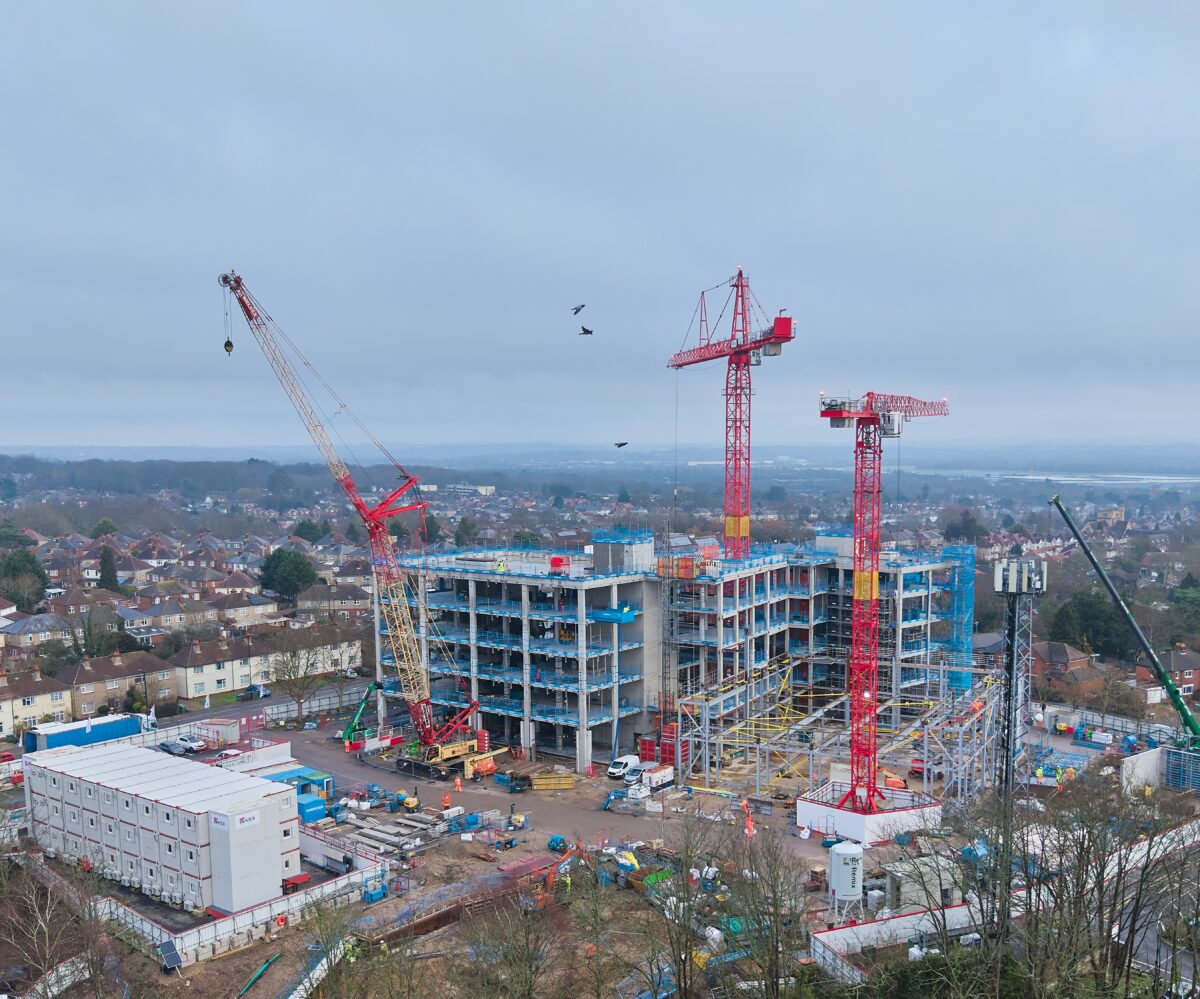
Building 75: Celebrating the team effort behind our newest building
As an innovative, sustainable building that will improve Highfield Campus and the experiences of our community, the upcoming Building 75 is a real milestone for our University.
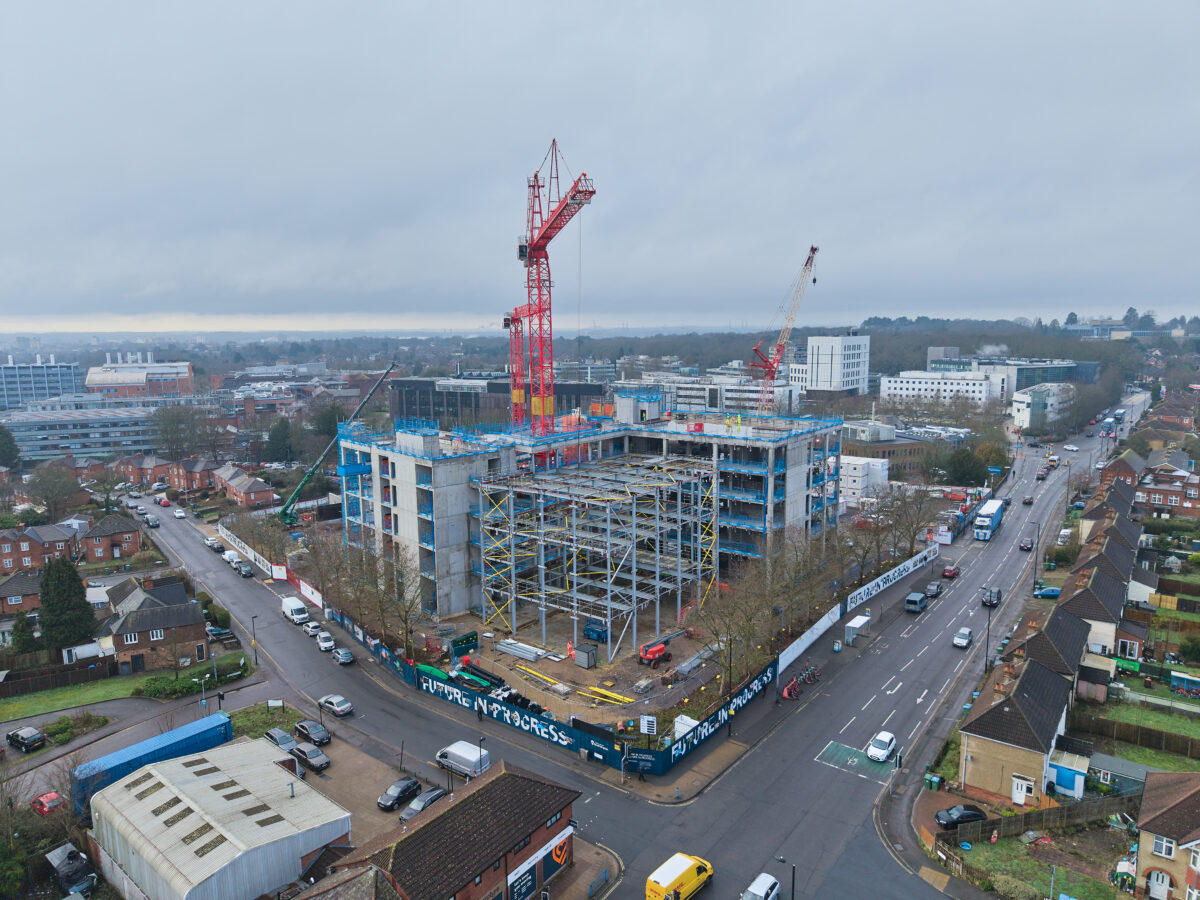
Colleagues who are on Highfield Campus often will have seen the fast-paced rise of the building – but beyond the site, behind the scenes, there is a huge collaboration between our colleagues in Estates and Facilities and external partners making it all happen.
With the building having reached its highest point of construction in last week’s topping out ceremony, it’s a fantastic time to catch up with part of the project team in Estates and Facilities and find out more about what working on B75 is like, and what they think we can all look forward to when the building opens in 2027.
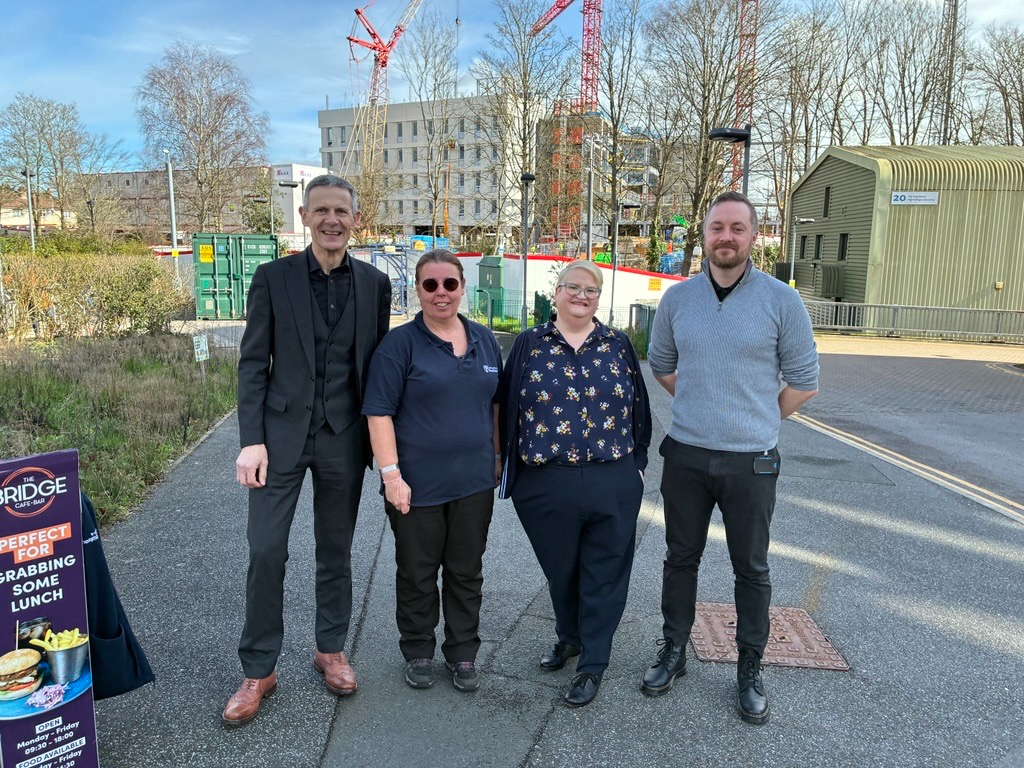
What does your role involve, particularly in relation to B75?
Keith Butler: As Project Director, I have overall responsibility for the delivery of B75 and represent the University for all matters relating to the project, overseeing the work of an external team that includes designers, contractors, a project manager and a cost manager. We also employ a range of specialists for subjects such as town planning and public engagement. Together with Sam Arnett, I also liaise with a wide range of University stakeholders to ensure that the new building meets our requirements.
Major construction projects are delivered by large project teams, all of whom rely on the efforts of others; and I spend a lot of my time ensuring that the project team is working effectively, building positive relationships and trust along the way.
Amanda Boorer: Through the Landscape Service, I am in close partnership with various stakeholders and project teams to ensure that the overall aesthetic for the project is in keeping with our values and bio-sustainable targets – with a practicable maintenance approach which will enhance the environment for everyone using the building and its surrounding spaces.
Tracey Waterhouse: In Estates Planning, I work closely with the project team and the architects to sort out the building’s numbering — everything from giving B75 its official building number to creating the full layout plan inside.
It’s a collaborative process, with ideas going back and forth until we’re all happy that the layout makes sense, is easy to follow, and supports the wider project. It’s a small part of the bigger picture, but it helps set the foundations for how the building will be used and understood in the long run.
Elliot Prescott: My role involves looking after areas of our estate (e.g car parks, bike sheds), governance policies such as our Travel Plan, and at times, identifying areas of our estate which could be used better. This was how I became involved in the B75 project, particularly in the early stages. As many colleagues will remember, the B75 site used to be the Broadlands car park. Although this car park was quite busy, capacity modelling showed that the University had sufficient parking spaces elsewhere on Highfield to accommodate the demand, which is why the area was suitable for the B75 development.
What does the milestone of topping out mean for you and your role?
KB: Topping out is a traditional milestone on large construction projects – for me, it is an exciting time as we see the scale of the new building emerging and the impact it will have on its surroundings.
TW: For me, topping out is the point where all the early planning work starts to become something you can actually see taking shape in front of you. So much of what we do in Estates Planning happens behind the scenes or long before the building is physically there, so it’s lovely to reach a moment that makes it all feel real.
It also feels like a natural pause to look back at everything we’ve done so far, and feel proud of how it’s come together. As the project moves into its next phase, our involvement shifts from setting the foundations to supporting the teams as the building gets closer to becoming a usable space.
AB: Seeing the building grow and take shape with all teams fully invested has been great. Going forward, my part of the scheme is still being planned – I am excited for the next stage.
EP: A lot of work has gone into this project, long before the first spade hit the ground, so it’s good to see the building begin to take shape. What used to be a concept on paper or a computer screen has developed into an actual building on site, and this will continue to look better and better from this point onwards.
My involvement will now transition into ensuring that the site is suitable for all users ready for completion. This involves things like kerb alignments, which isn’t the most exciting of details, but it is important!
What have you enjoyed most while working on this project?
KB: B75 is the first project I have led for the University, and I have thoroughly enjoyed getting to know the various colleagues and stakeholders who have contributed to the team effort.
TW: I’ve really enjoyed seeing how all the different pieces of the project come together. A lot of my work happens early on, so watching the drawings and plans slowly turn into a real building has been genuinely exciting. It’s one thing to work with numbers on a page, and another to walk past the site and think, “Ah yes, that’s the room I renamed three times!”
I’ve also loved the teamwork element — there’s something really satisfying about the back-and-forth with the project team and the architects, especially on the days when we finally agree on something after what feels like 57 versions. It’s a very “small win, big smile” moment.
AB: This is the largest development I have been involved with over my career, working with a new group of people with lots of various skills.
Having input on the project’s green space plan has been really challenging, selecting trees and plants that will transform a very muddy site – where I have lost a boot when I unfortunately got stuck! – to a green and usable space.
EP: I’ve enjoyed playing a part in making the Highfield Campus, as well as the wider University, a better place to live, work and study. I’ve lived in Southampton most of my life and enjoy working for the University, so it’s great to be involved in these projects, helping transform and improve a community which matters to me.
What are you looking forward to most for B75 over the next few months?
TW: Now that the structure is up, it feels like every week brings a visible change. As we move closer to completion, I’m especially excited about the handover stages, where all the numbering, layouts, and planning decisions we’ve been working on will start being used in practical ways. That’s the point where we get to see how the foundations we’ve put in place help the wider Estates & Facilities teams do their jobs smoothly.
For me, the completion of B75 will feel like a big “full circle” moment. So much of our work happens long before there are walls, windows or even a site to look at, so reaching the finish line is always satisfying. It’s a reminder that all the careful planning, the tweaks, the renumbering (and re-renumbering!), really do play an important part in shaping a space that people will use every day. I think B75 will become one of those buildings that just works for everyone who uses it. And of course, there’s something lovely about being able to point at a fully finished building and think, “I helped make that make sense.”
AB: Looking to the future, I think the green space will bring a real, positive impact to campus for all its users. Seeing what used to be a car park become a modern teaching space with outdoor facilities that can be both incorporated in classes and used for leisure time will contribute to a better environment for our community.
KB: Our attention now shifts to the internal fit out of B75 and planning for next Spring, when the building will be handed over to the University. The transfer of responsibility from Kier to the Estates & Facilities team is complex and requires thorough planning, which is currently under development.
Construction completion is the point at which the bulk of my work is done, and others in Estates & Facilities pick up the baton to bring B75 to life as an outstanding new teaching and learning facility.
EP: I’m really looking forward to when the building and its surrounds are nearly complete, and people begin to see what a great addition B75 will be to the Highfield Campus and the University community – whether you’re a member of staff, a student, a visitor or a contractor.
When the plans were announced to close the Broadlands car park to make way for B75 there was naturally some concern, but I think people will see the real value it brings to the University. I hope that we can use B75 as an example that change can be a good thing.
Kevin Argent, Executive Director of Estates and Facilities, praises the team effort going into B75:
“Building 75 has been a true feat of collaboration between Estates and Facilities, Kier Construction Southern, as well as our fantastic local and external partners – I would like to thank them all for their continued hard work.
The whole team in Estates and Facilities have shown real commitment and dedication to this large-scale project on a daily basis, working to deliver a modern, sustainable, inclusive facility that will benefit the entire University community. There is no doubt that the Estates Masterplan is ambitious – but with such a fantastic team to bring it to life, I am confident that together we will enhance Highfield Campus and our wider estate to provide our community with an experience that fully meets their needs.”
Share this article to social media: