Marking UK Disability History Month 2026
UK Disability History Month (UKDHM) is an annual nationwide event focusing on the history, rights, and lived experiences of disabled people. This year, UKDHM runs from 19 November to 19 December 2026 under the theme ‘Disability, Politics and Democracy’.
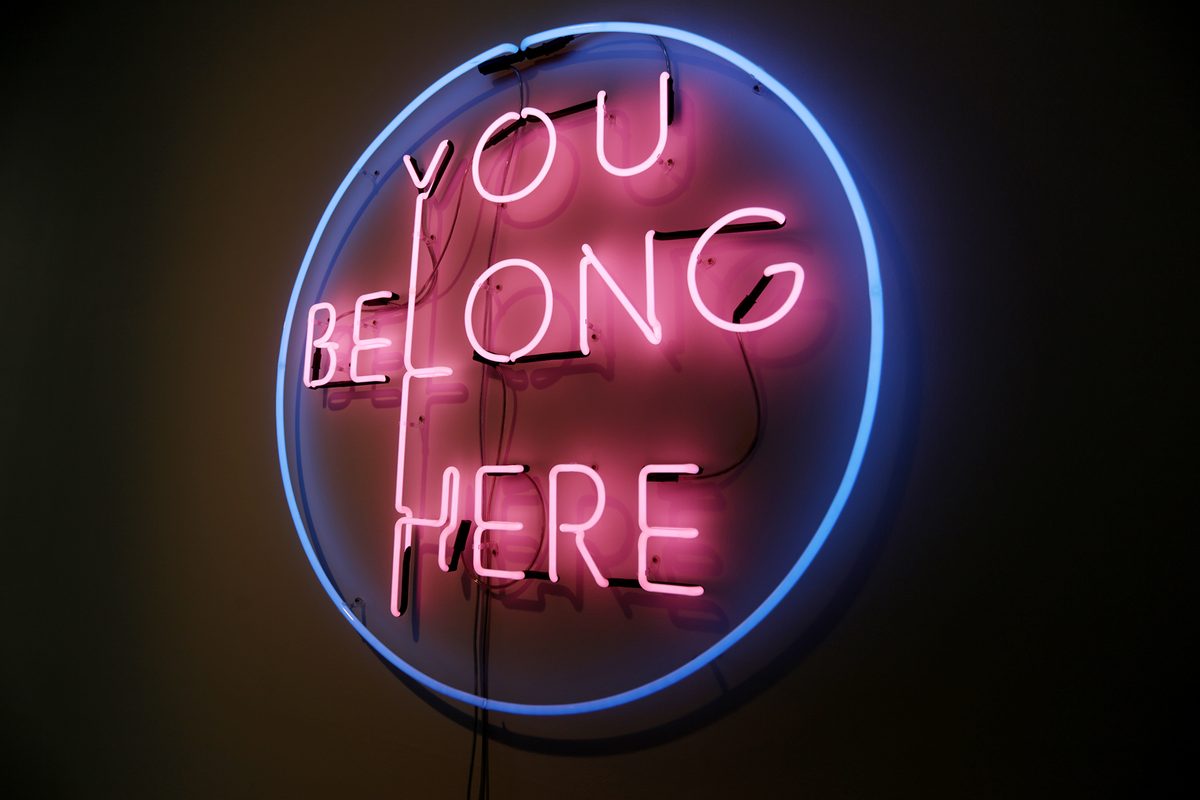
Commissioned by John Hansard Gallery and supported by Tate ARTIST ROOMS
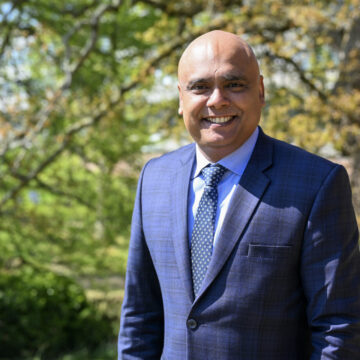
To mark the month, our University is hosting a series of activities, headlined by our flagship launch conference entitled: We Mind the Gap: Representation of Disability and Neurodivergence in Democracy’. It takes place on Monday 23 November, commencing at 09:00am at Garden Court and will be introduced by Vice-Chancellor, Charlie Jeffery and Pascal Matthias, Associate Vice-President (EDI & Social Justice). For more details and to join in person please register on Eventbrite. You can also join the group for the annual flag-raising event at 14:30 in Jubilee Plaza, on Highfield Campus.
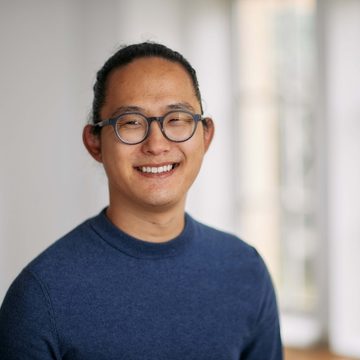
Dr Ben Whitburn from the Education School and Wendy Appleby, Vice-President (Operations) are Co-Chairs of the Disability Equality Steering Group. Staff Matters asked them about the conference and the University’s support for disabled people in general.
What is the objective of our conference?
The primary objective of the UK Disability History Month conference is to showcase work taking place across the University of Southampton by disabled people, with disabled people, and in relation to disability. It is also about bringing disability knowledge and experience into view: recognising disabled people not simply as the subjects or recipients of university activity, but as people who produce knowledge, shape practice and contribute to the life of the University. The conference responds to something of an impasse. On the one hand, more people are identifying as disabled, reflected very clearly in the substantial growth in students declaring a disability when they enrol. On the other, the conditions within which universities work to support disabled students and staff are becoming increasingly difficult. The conference provides a space for these realities to meet, and for disability knowledge, experience, research, practice and creativity from across the University to come into conversation.
How does this year’s conference programme connect with the official UK Disability History Month national theme?
This year’s UK Disability History Month theme, ‘Disability, Politics and Democracy’, provides the starting point for the conference. Our title, ‘We Mind the Gap: Representation of Disability and Neurodivergence in Democracy’, picks up the question of the disability democracy deficit, including the significant underrepresentation of disabled people in formal political life. But we want to push the idea of democracy further. Disability politics is not confined to elections or elected office. It is also about who gets heard, whose knowledge and experience count, how disabled and neurodivergent people are represented, and how institutions make decisions that affect their lives. The conference therefore approaches democracy broadly, bringing questions of representation, participation, knowledge and power into conversation across research, practice, creativity and lived experience.
What can we expect to see at this year’s event?
The programme brings together individual papers, longer group sessions, artwork and discussion. The contributions cover political representation and participation, healthcare, digital accessibility, workplace democracy, education, culture and the arts, as well as the experiences of disabled and neurodivergent people in these different spaces. What is interesting is the range of places in which questions about democracy emerge. We are not only talking about Parliament or formal politics. We are asking about who participates, who gets heard and who gets to influence decisions in healthcare, education, research, workplaces and cultural life.
What were the key takeaways or feedback from last year’s event, and how have they shaped this year’s schedule?
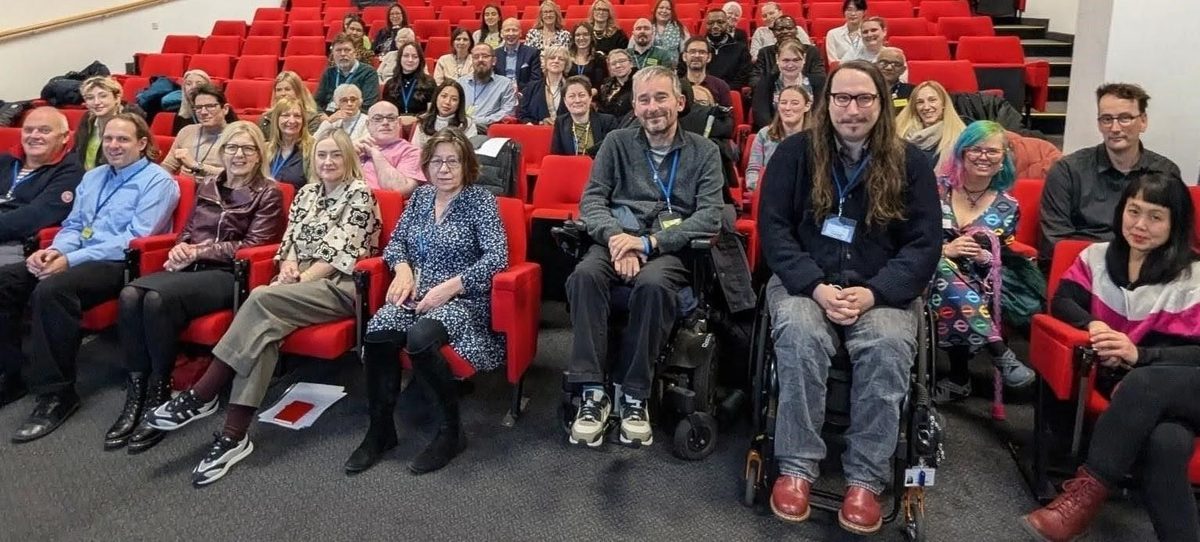
Last year’s event was hectic. We knew that ourselves, and the feedback we received afterwards confirmed it. There was a lot going on, which meant people did not always have enough time to engage properly with individual contributions or with one another. We also learnt some important lessons about accessibility. The venue presented physical barriers, including the steps to the main stage in the lecture theatre. We have taken that seriously in planning this year’s event. This year is deliberately more stripped back. We have fewer contributions, but more time for engagement with them and for discussion. We have also moved to Garden Court on Highfield Campus, using two rooms with accessible bathrooms and catering nearby. The aim is a less hectic event that gives people more time and makes participation easier.
Are there specific initiatives or conversations started last year that we have followed up on?
Last year was very much about bringing together a community around disability and neurodivergence from across the University. This year we are building on that. We have more group sessions, greater involvement from students, and more space in the programme for people to engage with one another rather than moving quickly from one presentation to the next.
What digital and physical accessibility standards are in place for all the events being hosted?
Accessibility has been an important consideration in planning this year’s event, particularly in response to what we learnt last year. We have moved to Garden Court on Highfield Campus, where the conference will run across two rooms, with accessible bathrooms and catering nearby. We have also reduced the density of the programme, allowing longer sessions, regular breaks and more time for discussion. We are not able to run a fully hybrid event this year because we do not have the resources to support that properly. That is regrettable, particularly for an event concerned with disability and participation. We will, however, livestream the event so that people who cannot attend in person can still access the proceedings.
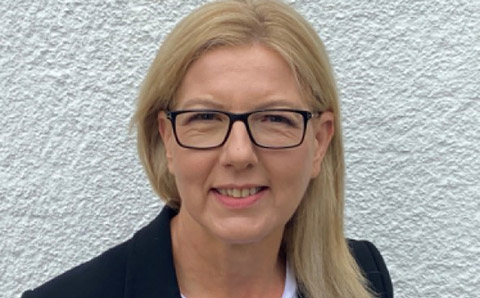
Wendy Appleby, Vice-President (Operations)
Why is it important for our University to run such an event?
As a University that puts its people at the centre of its strategy, it is important that we celebrate the diversity of our people and raise the profile of disability and neurodivergence. The opportunity to showcase both our research and other academic work alongside practical solutions being provided by professional services is a unique feature of our UK Disability History Month Conference. I am very much looking forward to the range of sessions on 23 November.
Beyond raising awareness, what concrete policy or accessibility changes within the university are we advocating for this year?
I’m delighted at the progress we are making with our Estates and Digital Strategies which both address accessibility concerns. On Estates, we are developing an Inclusive Design Guide, a collaborative initiative between Estates and Diversity and Inclusion teams, to ensure the needs of different users inform the development of our Estate. There is still much to do but I’m pleased we are addressing the needs of our community, particularly taking account of disability and neurodivergence.
This event is supported by the University of Southampton UK Disability History Month Working Group, chaired by Wendy Appleby, led by conference convenors: Dr Ben Whitburn, University of Southampton Education School, and Dr Ronda Gowland-Pryde, Public Engagement with Research unit, with additional support from Public Policy Southampton. Special thanks to all colleagues in the UKDHM Working Group the central EDI team and the conference support volunteers, Jane Vennik and Katherine Day.
For more information about the conference, please contact peruciviccommunity@soton.ac.uk