Our staff in the news
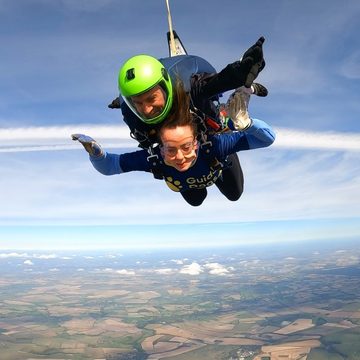
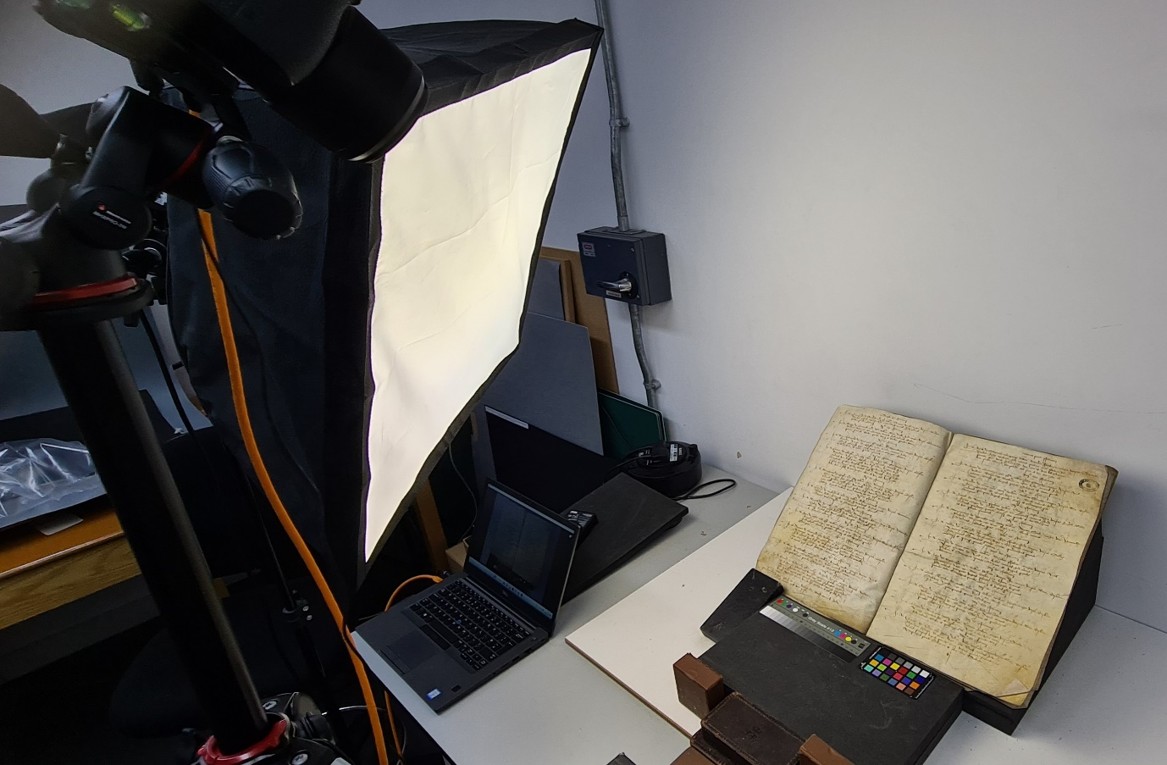
AI reads centuries-old records to chart Britain’s vast historic shipping trade
Professor Craig Lambert, Professor Jason Sadler and Dr John McAleer’s project to create an online interactive map and database charting Britain’s growth into a dominant global trading nation was covered by national and international outlets.
- Read our story or watch the video
- Exclusive in The Times newspaper and Times Online as well as the Independent, BBC Online and Smithsonian Magazine
Scientist’s poo test could reveal if you are smarter than your neighbours
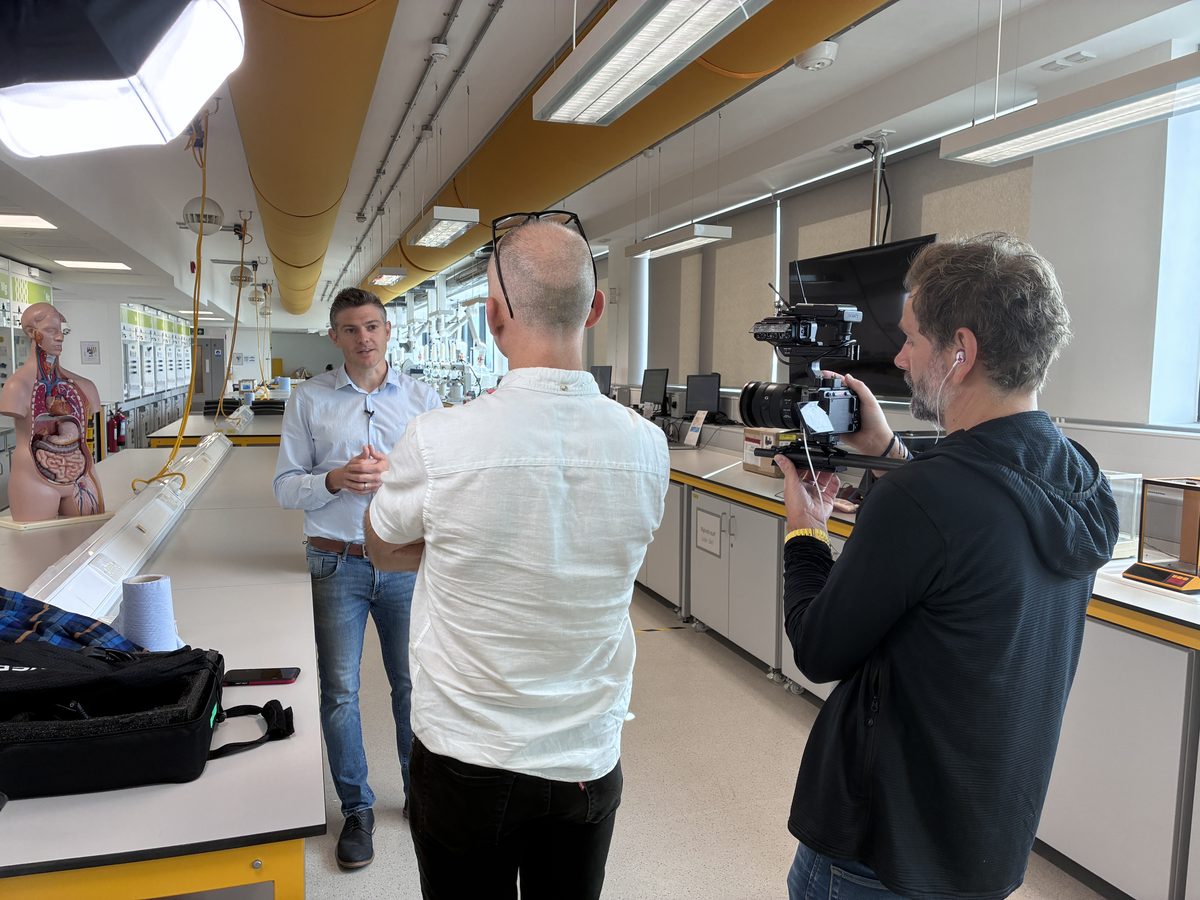
Taking a blue poo might seem like the stuff of nightmares but Professor Jon Swann thinks it could reveal the connection between speedy digestion and quick thinking.
- Read our story
- BBC South Today, BBC Radio Solent, BBC News Online and the Southern Daily Echo
Our academics on the budget, politics and global elections
- Professor Oliver de Groot, Professor Enrico Gerding and Dr Abhishek Kumar all commented to the media on the Chancellor’s Budget. Enrico spoke about the cost of living to BBC Radio Solent, Enricospoke to LBC about the new £300m AI biosecurity lab, and Abhishek told Heart FM and BBC Radio Solent that councils are major budget winners.
- Dr Mariana Borges was interviewed by BBC News about elections in Brazil.
- Professor Rob Johns spoke to BBC Radio 5 Live about the SNP’s annual conference and push for Scottish independence.
- Professor Tom Irvine spoke to LBC ahead of a creative industries AI summit organised by PM Andy Burnham about the importance of regulation and protecting the rights of artists as AI-generated art and music becomes more prominent.
- Dr Claire Hart spoke to BBC Radio Solent about people loudly using phones on public transport, following PM Andy Burnham’s crackdown on “headphone dodgers”.
Working with civic partners
- Sue Littlemore was interviewed by BBC South Today about a new report outlining the challenges and opportunities in turning Hampshire and the Solent region into a renewable energy powerhouse. It was also covered by BBC Radio Solent and Dorset, the Southern Daily Echo, Energy Live News. Read our press release.
- Professor Jane Falkingham was in the Southern Daily Echo in an article about I-Place 2026, a conference co-hosted by the university and Southampton City Council.
- MP Caroline Nokes visited academics including Professor Matt Middleton from our new Southampton Space Institute, reported the Southern Daily Echo.
Fighting flu and boosting healthcare
- Professor Salim Khakoo and Dr Andres Vallejo’s plans to create white blood cells with a memory of how to fight off winter flu bugs featured on ITV News, in the Daily Echo and News Medical.
- Professor Emily Gwyer Findlay was interviewed by BBC Radio 4 about the immune system.
- Professor Nazrul Islam’s research showing a heart drug combo reduces kidney damage in septic shock surgery featured on BBC Radio Solent, the Southern Daily Echo and News Medical. Read our press release.
- Dr Kinda Ibrahim spoke to The Sunday Times about the trial of a blood test aimed at reducing overprescription, particularly in the elderly.
- Dr Thomas Richardson told The Sun that loneliness is not a mental health problem, but it can worsen mental health and vice-versa.
Extreme weather and the environment
- Professor Alberto Naveira Garabato’s research revealing rapid changes in the Southern Ocean was covered by The Times of India, The Deccan Herald (India), The Hindu (India), The New Indian Express and Oceanographic Magazine. Read our press release.
- Professor Robert Marsh told the MailOnline that two huge icebergs that have broken away from the Antarctic could ground 100km off the coast of South Georgia.
- Dr Simon Boxall was on BBC Radio Guernsey talking about the effect El Nino may have on storms.
- Dr Keyvan Hosseini was interviewed live on BBC News about environmental impact of a major oil spill affecting the Strait of Hormuz.
- Dr Nikolaos Skliris spoke to The Guardian about extreme rainfall in central Thailand causing stagnant lakes to form in Bangkok.
- Dr Simon Boxall spoke to BBC Online about mixing of river and sea water at Christchurch Harbour after three children from separate families who spent time there fell seriously ill.
- Dr Ryan Reisinger told the Telegraph that humans cannot survive being eaten by a whale, in an article about a 19th-century sailor’s survival story inspiring a new film.
Archaeology and revealing the past
- PhD researcher Sam Ongaro and Dr Rachel Bynoe’s research into changing sea levels on the Northern Adriatic coast over thousands of years featured in The Guardian. Read our press release.
- Professor John McNabb commented to CNN about the remains of a Neanderthal found in Iraq, believed to have been killed by a sharpened spear 75,000 years ago.
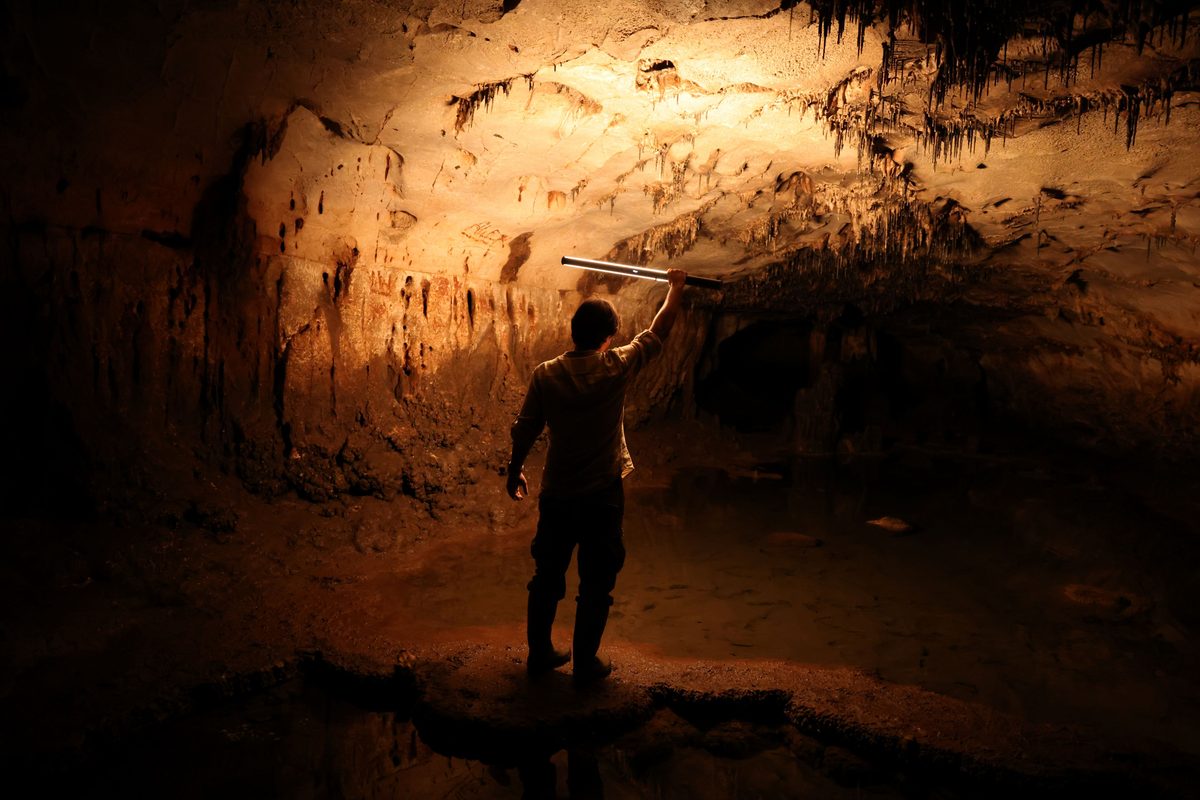
- Dr Aitor Ruiz-Redondo’s discovery of Roman inscriptions inside a Spanish Cave ran as an exclusive in The Independent. The story was later covered by CNN Greece and others. Read our press release.
Space and the universe
- Dr Rishav Roshan’s theory that the universe was shaped by an ancient particle that was overlooked for decades was covered by The Times. The story also featured on the BBC, Daily Mail, Independent, i Paper, Daily Star, and the Daily Echo. It was also picked up by Earth.com and Phys.org, and National Public Radio (NPR) in the USA and Canada. Read our press release.
- Dr Sam Kimpton-Nye’s feature in Aeon magazine asked ‘if everything in the universe has a logical explanation, does that mean even basic matter has to be conscious?’
Using AI responsibly
- Professor Gopal Ramchurn co-signed a letter with top computer scientists urging the UK government to make it clear who bears responsibility for the actions of an AI agent, leading to publication in The Times.
- Dame Wendy Hall appeared on the popular Naked Scientists podcast talking about why AI matters to governments and world leaders.
In other news
- Dr Claire Hart told the Independent that social media posting might “allow people to focus on the positive aspects of their lives, distance themselves from painful experiences, or reinforce an identity that is separate from their past” in reference to news about Meghan Markle’s father.
- Dr Jane Lavery wrote in TES (formerly Times Education Supplement) about how the Day of the Dead can help schools teach about grief.
- Professor Alice Hunt’s research on the popularity of the monarchy in the Caribbean was cited in a Sunday Times article about the King’s upcoming tour.
- Professor Robert Wood spoke to the FT about tribology – the science behind how surfaces move against each other, which he said “underpins” productivity in sectors like wind and nuclear power generation.
Advocacy
The Conversation
- How we mark our ballot paper can affect how we feel about voting – Dr João Ferreira
- Scientists aim to give lung cells a memory of how to fight viruses – Professor Salim Khakoo
- Why do some children become seriously ill with COVID? The answer may lie in their genes – Dr Negusse Tadesse Kitaba and Professor John Holloway
- Unpicking the pensions triple lock: where it came from, and what might happen next – Professor Maria Evandrou, Professor Athina Vlachantoni and Professor Jane Falkingham
- Autism and ADHD earlier support is welcome but access to diagnosis must be protected – Dr Hannah Bowers
- Hospital appointments can make greener travel harder – Dr Keyvan Hosseini and Professor Dawn-Marie Walker
- Where did bats come from? New research points to Europe – Dr Veronica Zamora-Gutierrez and Dr Neil Gostling
- ‘We changed the system’: how Serbian students ended Alexander Vučić’s 12 years in power – Professor Tereza Capelos
- The deep ocean’s protection against warming started to change in 2016. Nobody knows what happens now – Professor Alberto Carlos Naveira Garabato
- Indonesia’s El Niño‑driven peat fires are choking the region – and releasing centuries of stored carbon – Dr Gareth Roberts
- London Film Festival round‑up: a five‑star weepie, a sweeping Spanish epic and a misspent youth in post‑punk Manchester – Dr Louis Bayman
Times Higher Education
- Make your higher education meetings neurodivergent-friendly – Jamie Wilde
- Four ways to create more inclusive patient and public involvement in research – Dr Gary Hickey
Working with the media team
Do you have a story that could make headlines in the media?
Find out about engaging with the media here – or email the media team at press@soton.ac.uk.