Our staff in the news
Scientists say supermassive black holes not as big as first thought
Astronomers have peered into the centre of an infant galaxy for the first time using a powerful new instrument and found the supermassive black hole at its heart was ten times smaller than expected. Professor Seb Hoenig was a co-investigator on the project. Read more.
Media coverage
- Our story featured in the Mirror UK and USA, Daily Mail, Metro, Daily Star, Evening Standard, Independent, BBC Newsround and Al Jazeera.
- Plus mentions on LBC, Virgin Radio, and TalkRadio, and on the Evening Standard’s Tech and Science podcast.

Southampton project launched to help Black residents living with chronic pain
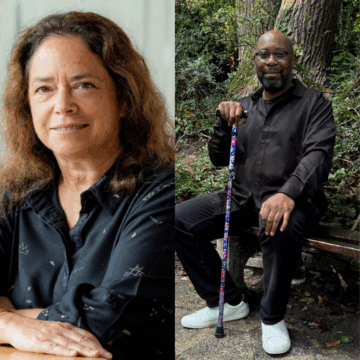
A new project has been launched in Southampton to tackle significant health inequalities affecting the city’s Black community. Professor Tamar Pincus is one of the lead academics involved. Read more.
Media coverage
- Our story was broadcast on BBC South Today, BBC Radio Solent (and Dorset), Greatest Hits Radio, and Heart FM.
- It also appeared on BBC Online and the Southern Daily Echo.
Other news coverage
- Professor Phil Charles’s research about a greedy white dwarf star devouring its closest celestial companion featured in the Independent, the Mirror, India Today, IFLS and the Scottish Herald. Phil was interviewed on LBC, Heart FM, and appeared on Virgin Radio and Ulster Radio in Ireland.
- Professor Ying Cheong’s comments on research creating egg cells from skin cells had more than 400 mentions including the Daily Mail, The Times, The Telegraph, The Sun, The I, The Guardian, The Independent, Sky News, LBC, India Today, NDTV, CNN, El Pais and Newsweek.
- Dr Phil Wiseman appeared on BBC Sky at Night talking about how astronomers are measuring the expansion of our universe by watching stars explode.
- Dr Kamil Zwolski spoke to BBC Radio Scotland about the Russian drone incursion into Poland.
- Dr Marie O’Mahony of WSAwas interviewed on BBC Radio 4’s Dough about sustainability in the ‘smart’ clothing fashion industry.
- Dr Helen Paul spoke on BBC Radio Solent about 200 years of the modern railway, ahead of an appearance on BBC South Today marking the anniversary.
- Dr Duo Chan’s part in a study looking at a link between our added sugar intake and a warming climate was covered by PBS in the US, NBC, Scientific American, ABC, Bloomberg, Daily Mail and the Independent.
- Professor Eugen Stulz, who leads a new consortium to develop next-gen cancer treatments, had the project covered by BBC News and the Russell Group.
- Dame Wendy Hall spoke to US podcast All Sides to talk about inspirational British computer scientist Dame Stephanie Shirley, who died at 91 last month.
- Dame Wendy also gave an interview to Today on BBC Radio 4 about Google’s £5billion investment in UK data centres to support the next generation of artificial intelligence.
- Dr Neil Gostling was interviewed on BBC Radio 4’s Today about bringing back the Dodo, following a successful UoS press release last year.
- Dr Alessandro Silvano, who is involved in research casting doubt on geoengineering proposals to tackle climate change, had his comments covered in the Southern Daily Echo.
- Dr Stuart Turnbull-Dugarte commented to Associated Press about Labour’s handling of the threat from Reform’s rise in support and wrote a piece in the Guardian on the same subject. Also, his comments on Keir Starmer’s “island of strangers” immigration speech ran in The Economist.
- Professor John Denham spoke to BBC Radio 4 about how Labour tackles the threat from Reform.
- Professor Tony Kushner paid tribute toEdgar Feuchtwanger in an article in the Southern Daily Echo. Edgar, who died aged 100, fled Munich in 1939 as a child refugee before later spending 30 years teaching at UoS. Professor Kushner was also interviewed by Jewish Life Magazine about his book The Jewish Pedlar.
- Professor Pamela Ugwudike was interviewed on Heart Hampshire about sharenting.
- Dr Michael Head told the Daily Mirror that it is highly unlikely a recent Eboloa outbreak in the Democratic Republic of the Congo will spread beyond the African continent, beyond a small number of imported cases due to travel. He also commented in the Daily Mirror on Donald Trump’s MMR claims, in The Telegraph on meningitis in Africa, and the Metro and the Mirror about the Stratus Covid strain.
- Dr Jay Self and Professor Joerg Fliege’s trial of computer games to help children with the eye condition Nystagmus featured on ITV Channel Islands. The project was also on BBC Channel Islands News.
- Sophie Gray, a PhD researcher, had her work on the acoustics of hornet nests featured in the Independent and The Sunday Express.
- Dr Claire Hart was on BBC Radio 4’s Woman’s Hour discussing her research into phone snubbing.
- Professor Roxi Carare commented to the Guardian on whether doing puzzles can help prevent dementia.
- Professor Mark Cornwall spoke to NBC News about the first president of Czechoslovakia, Tomáš Masaryk, after a letter containing his final words was opened for the first time.
- Professor Mark Stoyle appeared on France 3 TV in the series Secrets d’Histoire (at 39 mins) in a programme about the marriage of King Charles II’s sister to the brother of King Louis XIV.
- Professor Will Jennings wrote about trust in politics for the Big Issue
- Dr Freya Womersley was quoted on her research on whale sharks and ship collisions in National Geographic.
- Dr Hannah Schiff was named a “future leader” by Touch Respiratory magazine for her research aiming to transform respiratory and pulmonary medicine.
- Professor Hasan Arshad answered callers’ questions about allergies on BBC Radio Solent.