Disability Now! Conference
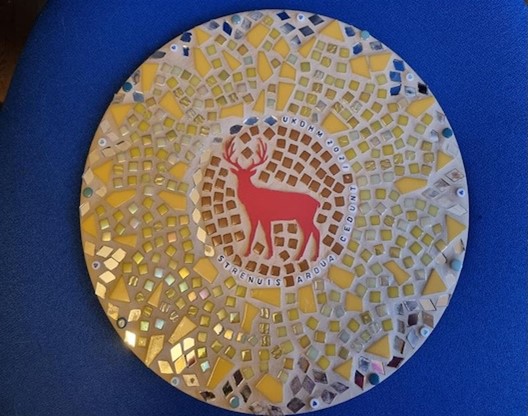
Artwork Credit: Nadine Nowe-Andrews: This mosaic celebrates strength, inclusion, and the beauty of diversity within the University of Southampton community.
UK Disability History Month runs from 20 November to 20 December and there’ll be a variety of events at the University to increase awareness of disability and to promote disability equality.
To launch the month, Dr Ben Whitburn, Associate Professor, Southampton Education School and also co-chair of the Disability Steering Group, has come up with the idea of a Disability Now! Conference to take place on 18 November. Wendy Appleby, Vice-President (Operations), who co-chairs the Group with Ben, has been finding out what his hopes are for the event.
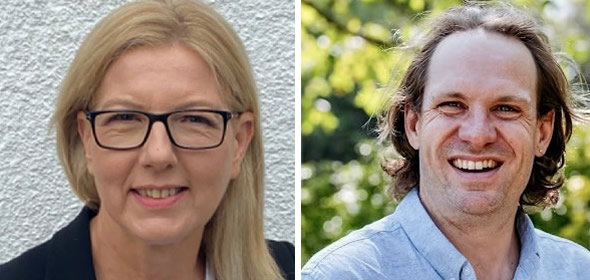
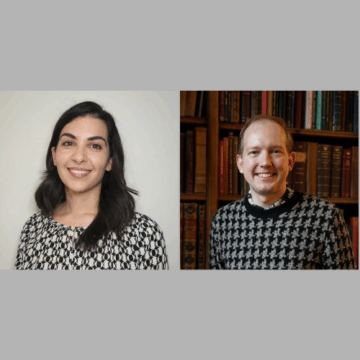
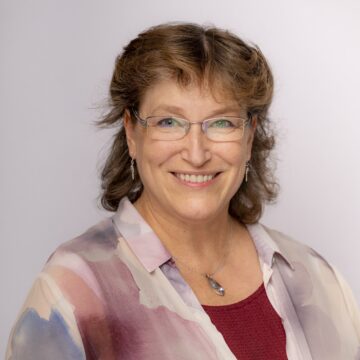
Wendy Appleby and Dr Ben Whitburn
Wendy: What’s the background to your idea about a disability conference?
Ben: To be frank, I struggle with the idea that we celebrate, at a particular time of year, an outcome like disability equality, only to shelve it and return to it again the following year. For those of us who live with compromised accessibility, we have to constantly think about potential accessibility barriers, reasonable adjustments, contingencies and so forth. It is largely (but certainly not always) why researchers do work in the disability area, and certainly why professional staff work around the year on these matters, along with educators across the educational sectors.
Following that, I wanted to draw attention to the kind of work undertaken at UoS either within our own university community or elsewhere, that draws attention to such matters with a view to effecting sustained change. In so doing, we recognise the limitations of equality as well—preferring to work towards equity.
Wendy: The theme of the conference is Disability Now! Can you explain what this theme refers to?
Ben: The official UKDHM theme relates to disability through the life span and death, for reasons relevant to recent legislative developments, among other things. We wanted to centre this event in what people are doing now – in the very present. While some presentations may engage this broader view, our intention is to build community and learn from it what sort of disability related work is taking place today.
Wendy: You’ve put out a call for submissions for the conference, who have you got lined up already to talk at the event and what are some of the subject areas?
Ben: I’m reluctant to name names because I’ll assuredly miss people out. But over 30 abstracts have been received, from within our University community, academics and professional staff, research students and broader community members. All of this is testament to a thriving disability community at UoS that some of us may not have been aware of in terms of its breadth. People will present on topics across many disciplinary areas and subject areas, like digital accessibility, learning support, community care, biomedical ethics, personal lived experience, generative AI, and many more besides.
Wendy: What do you hope will be achieved by holding the conference?
Ben: I hope we learn a lot about how our community engages disability from a number of diverse angles. There’s an old saying that shining a light on issues is what helps us to find solutions. It might come from ableist underpinnings assuming all seeing and looking etc. but the metaphor is apt. If we draw attention to what our own community is achieving, we can learn more what that community is, what they do, and to what end.
In addition, I hope it helps us learn how disability draws broad research and professional interests together both within the university and beyond its borders. We might also identify among our discussions what might come next.
Wendy: where has your passion in this subject area come from?
Ben: I am severe sight impaired, a user of braille and screen reading software. I grew up at a time when institutionalism and segregation of disabled people was supposedly behind us. This is what motivated me into research in inclusive education because I sensed things are not quite as inclusive and free wheeling as we might hope. Now having worked in higher education for over a decade, I would say the conditions of marginalisation have shifted, but they’ve not gone away.
Wendy: You moved from academia in Australia to the UK, would you say there are any differences in the way both countries provide inclusive conditions for people with disabilities?
Ben: not really. Both countries have similar legislation and ambitions. Whereas the UK may have a few policies that Australia lacks, so too does Australia have provisions not existing here. The British Social Model was developed here, which is well known in many places and by much more of the broader UK population, though to what extent it is taken seriously I’m not so sure. Disability is a variation in humanity. Nothing more. It’s unfortunate in both countries that it still occupies a deficit-centred position.
Find out more about the Disability Now! conference on 18 November. All the in-person places are now booked but you can register to attend online.