Satellite Events during the British Science Festival
During the British Science Festival, there will be a range of other events taking place across Southampton and the wider region delivered by different organisations and partners.
These events are not run by the British Science Festival, but they all share our passion for celebrating the people, the stories and the ideas at the heart of science and we’re pleased to be able to help spread the word.
All the events are free but please check this website in case you need to book a place.

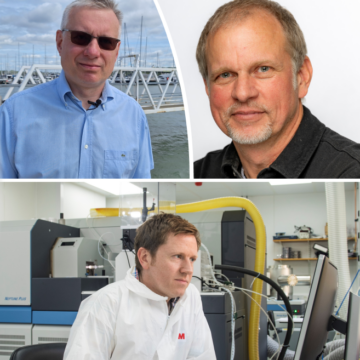
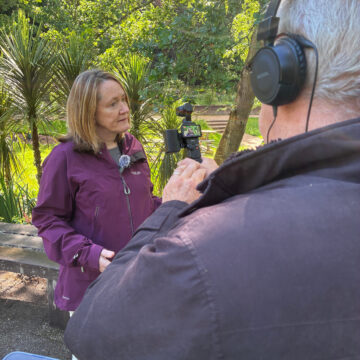
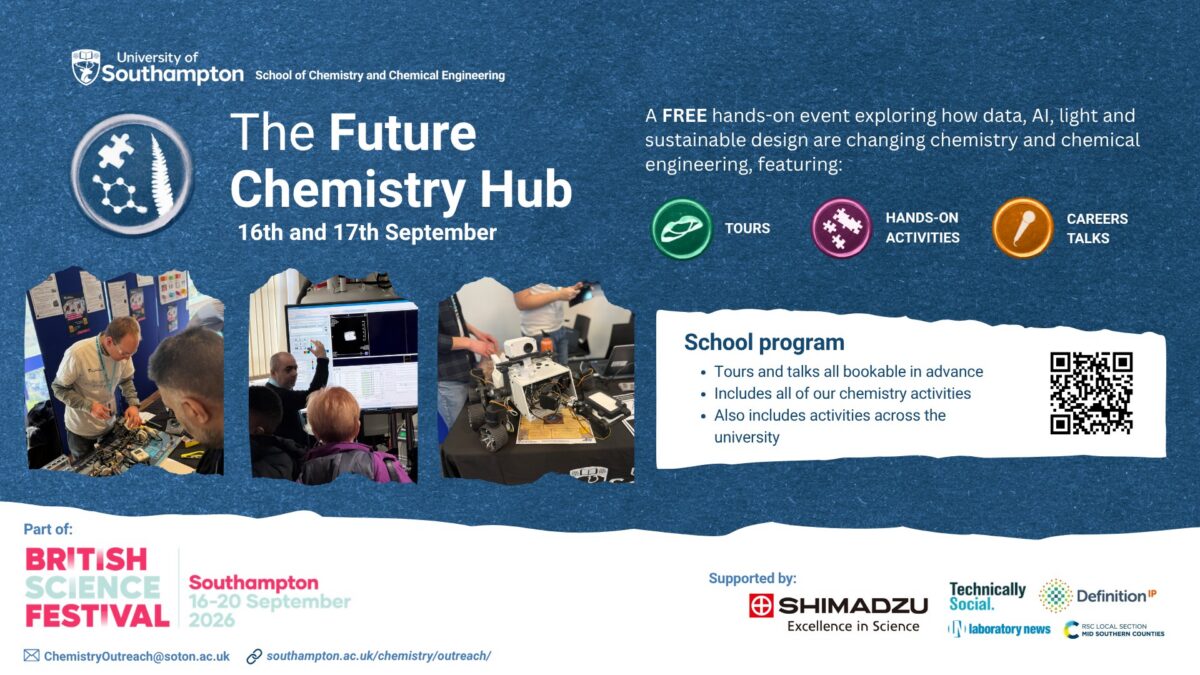
Staff Matters spoke to Dr Matthew Partridge (pictured left) from Chemistry about the Future Chemistry Hub satellite event which is planned for 16th and 17th September.
What can people expect to see?
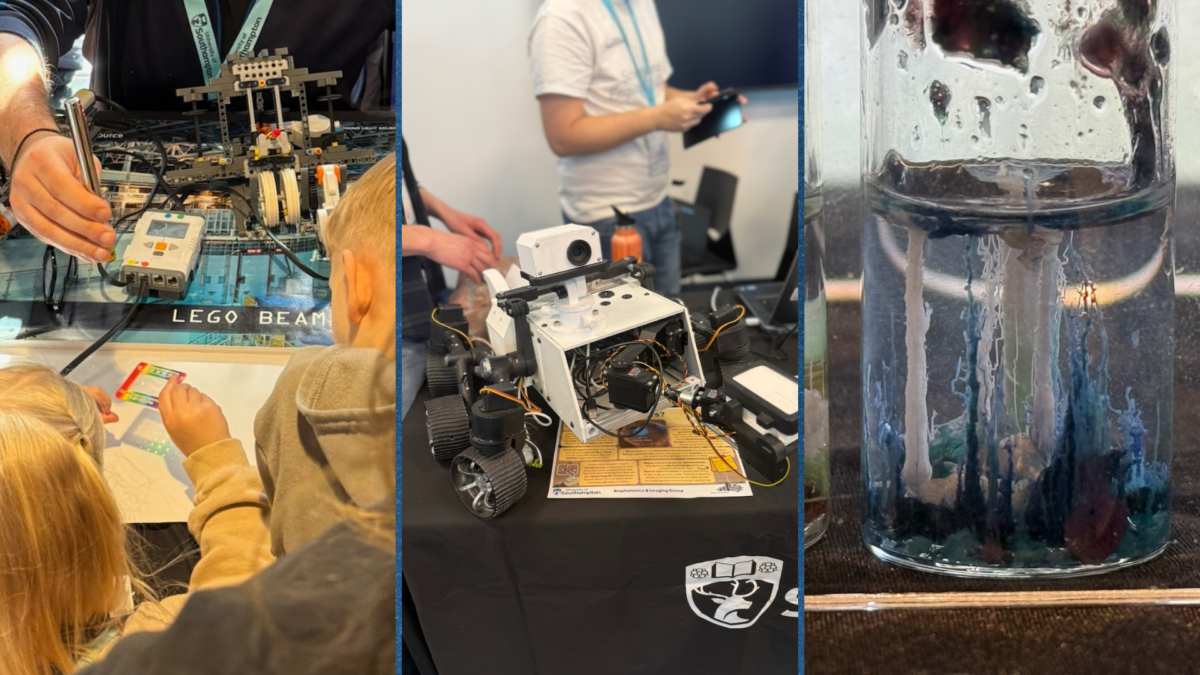
Visitors to the Future Chemistry Hub can expect a lively mix of hands-on activities, talks, tours and art, all exploring how chemistry and chemical engineering are changing. The Hub will be based in the School of Chemistry and Chemical Engineering at our University, with the building turned into a public space for hands-on experiments, demonstrations and conversation.
Across the two days, visitors will be able to try 16+ activities linked to modern chemistry, data, AI, light, materials and sustainability. Some activities will focus on familiar chemical ideas, while others will show how tools such as AI, spectroscopy, automation and data are becoming part of everyday scientific work. There will also be 3 different guided tours of teaching and research spaces, giving people a chance to see equipment and facilities that are not normally open to the public.
The talks programme will bring together researchers, students, industry guests, and communicators to share stories about their work and most importantly their routes into (and through) chemistry and chemical engineering. They’ll be 16 talks across the 2 days and speakers include the president of IChemE, a children’s author and a number of key industry researchers.
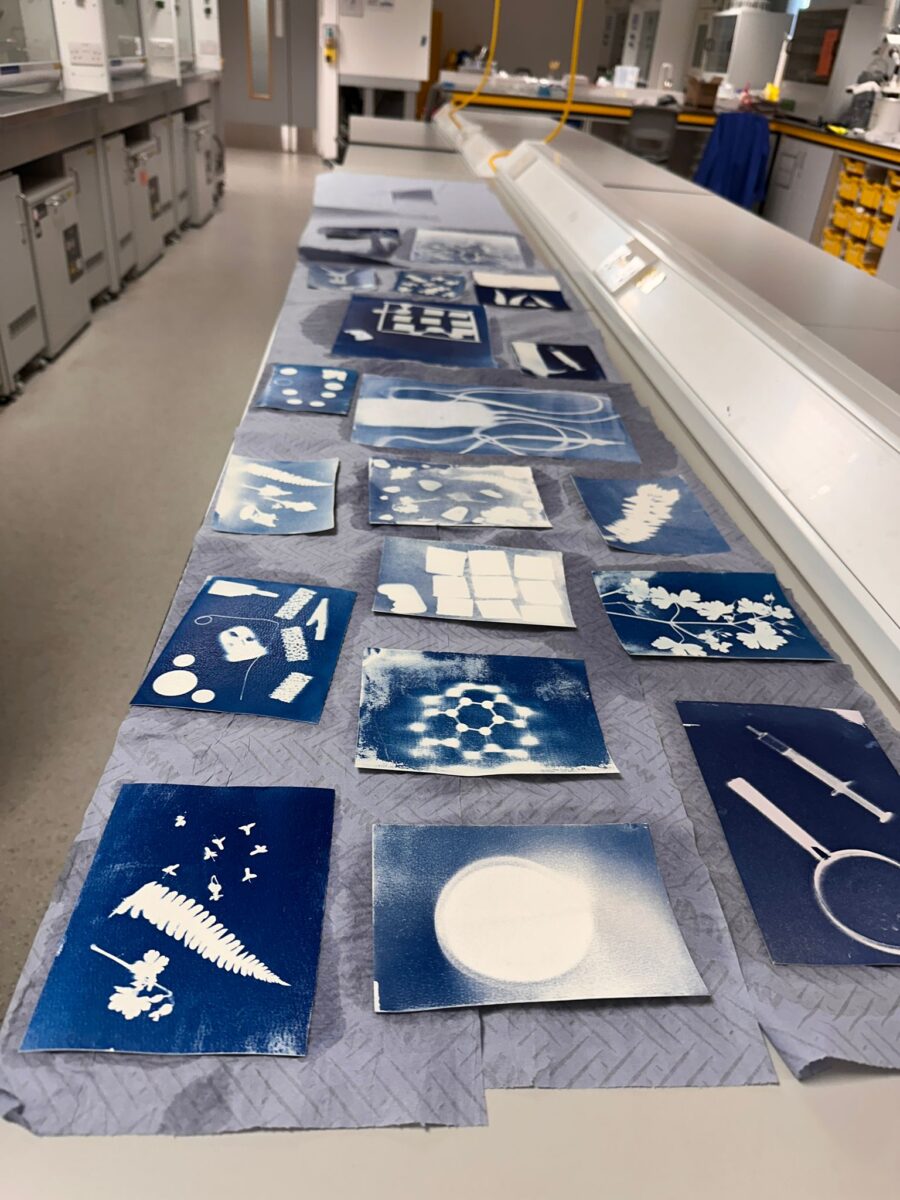
Alongside this, an art gallery will show chemistry from a different angle, using visual work, photochemistry and guidance from local artist Eileen White to explore how chemistry can be shown and communicated in different ways!
What do you hope to achieve by running an event of this kind?
The main aim of the Future Chemistry Hub is to make modern chemistry and chemical engineering feel open, relevant and worth talking about. We want visitors to leave with a clearer sense of what the subject looks like now, not just in textbooks or school experiments, but in real labs, industrial settings and emerging areas such as AI, sustainable reactions, data and advanced measurement.
A key goal is to create encounters between the public and the people who make chemistry happen. That includes researchers, technicians, students, teachers, companies and communicators. By putting these people in the same space as visitors, we hope to show the range of skills, careers and stories that sit behind the subject.
We also want the Hub to support better public engagement within the School itself. Running an event of this scale gives staff and students the chance to try new activities, develop confidence in communicating their work and build partnerships that can continue beyond the festival.
Why do you consider this is the right moment to create a space for discussion and learning about the Future Chemistry Hub?
This feels like the right moment because chemistry and chemical engineering are changing quickly, and many of those changes affect areas the public already cares about: sustainability, clean energy, materials, medicines, data, AI and the responsible use of new technologies. These subjects are often discussed separately, but in practice they are increasingly connected through chemistry.
The Future Chemistry Hub is designed to give people a space to explore those connections in a practical way. Rather than presenting chemistry as a finished body of knowledge, the Hub will show it as a field that is still developing, still asking questions and still shaped by people, tools and choices.
There is also a growing need for public conversations about data and AI in science. These technologies are already influencing how experiments are planned, how results are interpreted and how research moves towards real-world applications. That makes it important to create spaces where people can learn what these tools can do, but also where their limits and responsibilities can be discussed.
The official programme for the British Science Festival is now available and bookings are open.
Share this article on social media: