Developing the European Holocaust Research Infrastructure
The European Holocaust Research Infrastructure (EHRI) is a truly interdisciplinary organisation, bringing together researchers, archives and museums to combat the dispersal of sources and expertise across Europe and beyond. EHRI has been working as an EU funded project with large numbers of institutions across 17 countries in Europe and beyond since 2010. On the eve of the commemoration of the 80th anniversary of the liberation of Auschwitz-Birkenau, 26 January 2025, EHRI was inaugurated as a permanent European Research Infrastructure Consortium (ERIC) during a moving ceremony at the Polin Museum in Warsaw. Becoming a permanent legal organisation enables the next chapter in EHRI’s work as it advances a scientific, social and political agenda. The recent rise of antisemitism, xenophobia and aggressive nationalisms demonstrate that Holocaust research is never a purely academic concern, but a prerequisite for open and non-discriminatory societies across Europe and beyond.
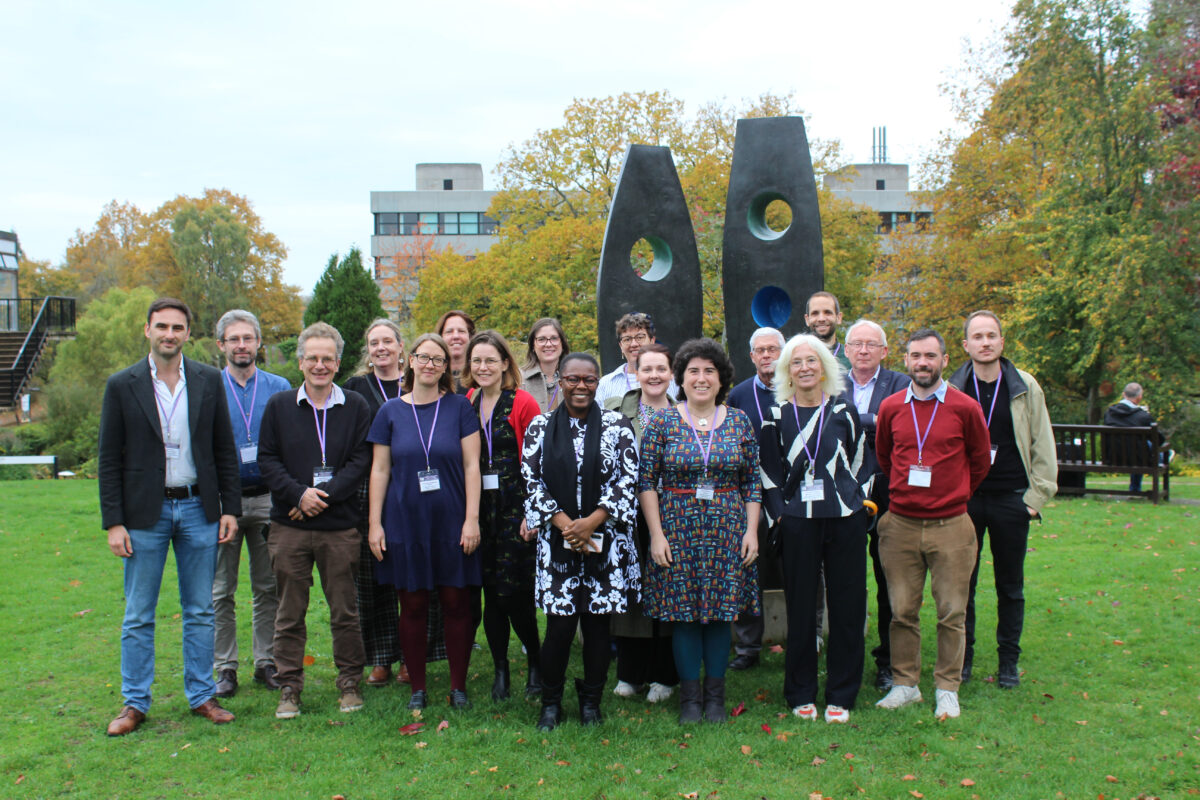
The EHRI-ERIC has resulted in the creation of ten new National Nodes – each national node is a consortium of institutions within a member country that advances EHRI’s mission nationally, and they are part of the overall EHRI-ERIC. Dr Rachel Pistol, who has been involved in EHRI since 2018, created and directs the UK national node, EHRI-UK. Rachel joined the University of Southampton in August 2024 and leads a consortium of archives, museums and universities including the Wiener Holocaust Library, The National Archives, and Royal Holloway, University of London, to bring together different expertise, and encourage researchers, archivists and heritage professionals to cooperate and collaborate beyond institutional boundaries.
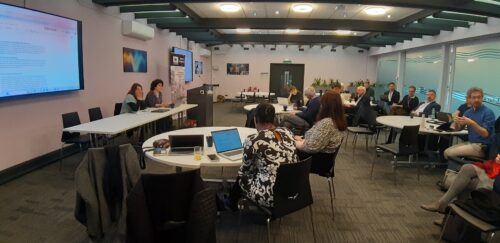
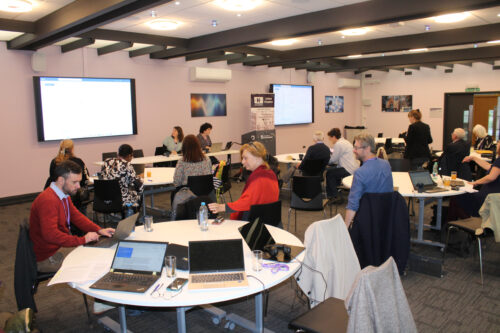
Not only does Rachel lead EHRI-UK, but in March 2025, she was unanimously elected as the inaugural Chair of the EHRI-ERIC National Coordinators’ Committee (NCC), one of the two governing bodies of the EHRI-ERIC. It is a huge honour to be elected to this position, and she is enjoying challenge of helping the NCC to develop a firm foundation from which the EHRI-ERIC can further build upon in the coming years. As part of this role, from 4-6 November 2025, the University of Southampton hosted the second in-person meeting of the NCC, welcoming representatives from Austria, Croatia, Czechia, Germany, Israel, The Netherlands, Poland, Slovakia and the UK, many of whom had not previously visited Southampton.
The agenda was wide ranging, including the creation of new guidelines, future funding, rebranding, activity plans and the creation of new working groups. Working groups are formed to address specific issues and themes and include membership from multiple countries. These groups are essential to building up and extending the main research infrastructure through research, activities and projects that advance EHRI’s mission and two new groups were presented and ratified.
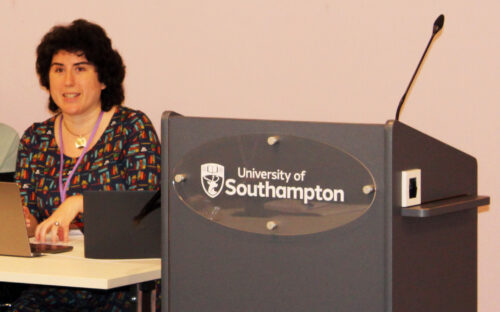
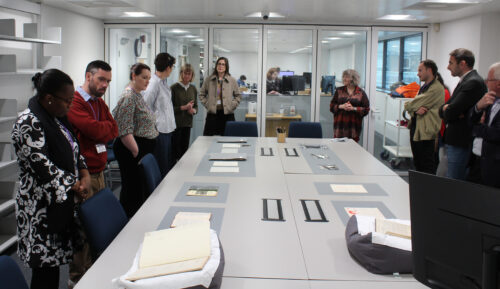
As part of the series of meetings, delegates were able to enjoy a tour of the Parkes Special Collections, where everyone was treated to insights into the collections and ongoing conservation of parts of Rabbi Schonfeld’s papers. A new tradition was also begun at the meetings: the EHRI-UK Annual Lecture that kicked-off the two-day programme. A panel consisting of Michal Frankl, Veerle Vanden Daelen, Michal Brandl, and Rachel Pistol discussed the topic of Transnational Holocaust Research in a Digital Age. The panel represented all stages of EHRI’s development and offered insights into the past and future of Holocaust research and how digital tools can be used to enhance access to reliable sources on this topic. The discussion was wide ranging and met with much interest from the audience.
All in all, it was a very successful two days and great for EHRI to be hosted by one of its newest partner institutions.
Share this article to social media: