Early Career Researchers to present prestigious Award Lectures at British Science Festival
We are delighted that three of our Early Career Researchers (ECRs) were successful in their application to present an Award Lecture at the British Science Festival which we will host from 16 – 20 September.
The Award Lectures, organised by the British Science Association, aim to promote open and informed discussions on issues involving science to a diverse and non-specialist audience.
Staff Matters has been talking to Hannah Dalgleish and Eva Stewart, two of the successful ECRs, about their research and the significance of these lectures.

How does it feel to be one of the Award Lecture winners?
I am over the moon! It feels amazing to be recognised for the research I care so deeply about and have worked so hard to develop.
Tell us about your career journey and how you got into this research area?
I have had a very ‘squiggly career’. I completed my PhD in astrophysics in 2020, followed by a short postdoc in Namibia working on astrotourism and sustainable development. There I learned about the importance of dark skies and the impacts of light pollution on health, wildlife, and culture. When I returned to the UK I sought out policy-related roles so that I could learn how to best engage with policymakers and implement change. I am now a Research Fellow on the SOUNDSCALE project where my backgrounds in science, policy, and science communication all combine.
Why do you think this initiative is an important part of the British Science Festival?
This is a fantastic opportunity which can really help boost the profile of an early career researcher and showcase their research. At the same time, the BSF offers the chance for people to hear directly from ECRs who are very passionate about public engagement and also very relatable.
What will your lecture be about?
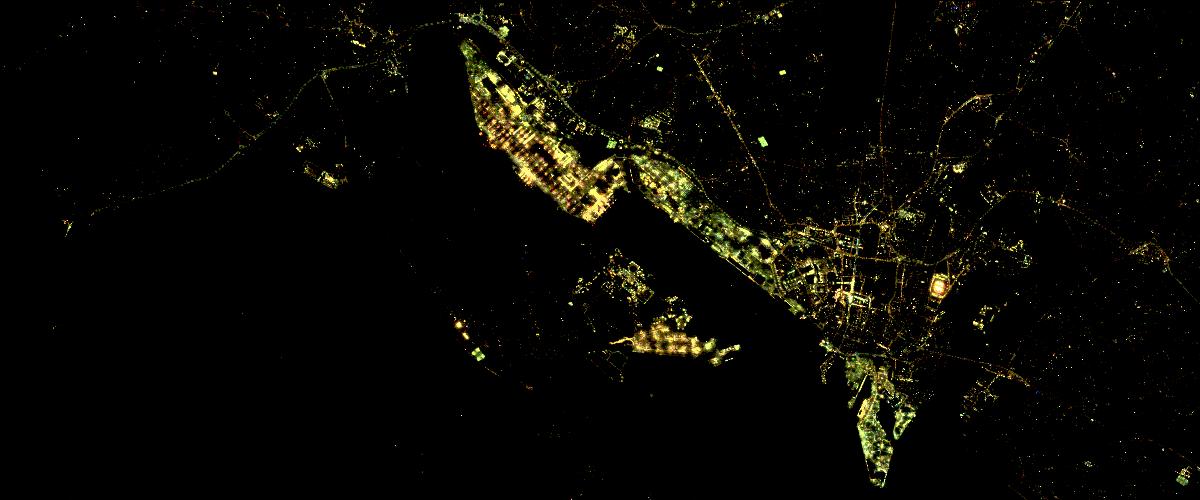
My lecture is about my Mapping the Night: Liminal Spaces project which works to disentangle the complex relationships between lighting, safety, and inequality in our cities at night. I’ll also be talking about the use of novel transdisciplinary methods and what needs to change if we are to design healthy, just and vibrant nighttime environments. The project was funded by the Sustainability and Resilience Institute.
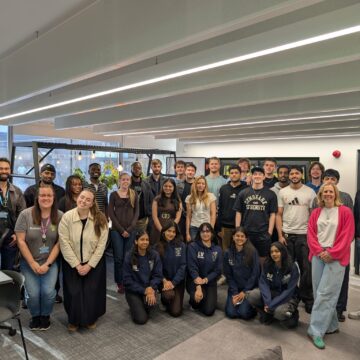
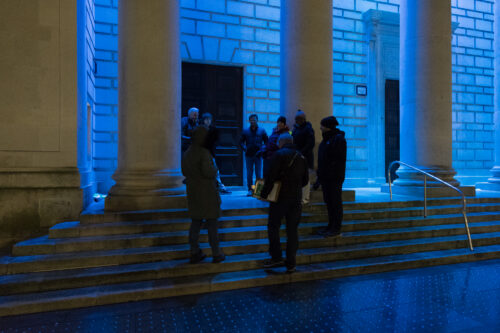
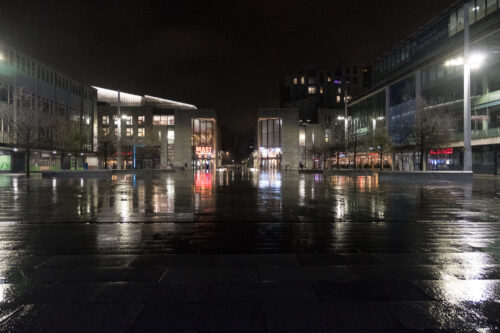
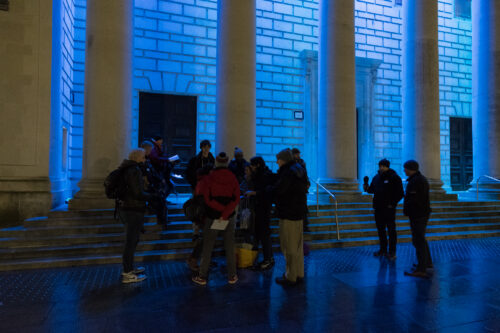
In these images, researchers organised a nocturnal walk around Southampton city centre to better understand how decision makers experience and perceive different nighttime environments. The team from our University brought together people with expertise in public health, the environment, the nighttime economy, security and policing, lighting design, as well as local council officers and local advocates for the guided walk.

Are there any specific methods you will use to make this engaging to your audience?
To be as engaging as possible by making the lecture interactive, inviting audience participation, and using methods like photo elicitation.
What’s the one meaningful change you’d hope to see for yourself, your community, or the wider world from your involvement in the British Science Festival?
The most meaningful change that I could hope for is for people to take away some new perspectives and start to think and question their own relationship with the night. If I can inspire people to foster a bit more positivity and find value in the dark hours, we will be one step closer to a future where everyone can feel empowered to enjoy the night.

How does it feel to be one of the Award Lecture winners?
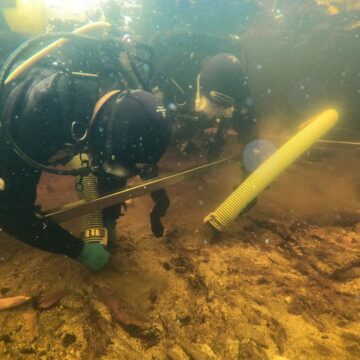
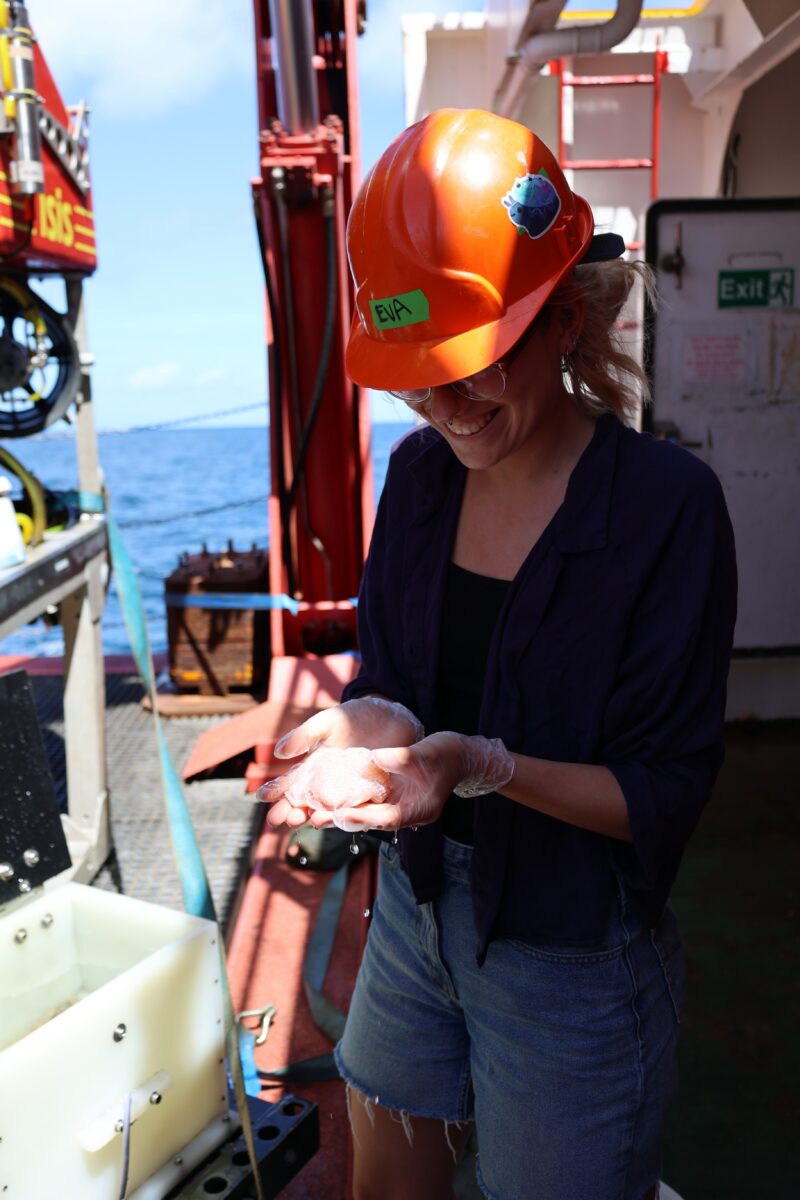
It’s an amazing honour to be selected to give the Environmental science Award lecture this year at the BSF. I’m very excited to be able to share my research with the public and hopefully inspire people with amazing images of deep-sea animals!
Tell us about about your career journey and how you got into this research area?
I’ve always loved the ocean and wanted to work in any kind of job that would let me be near the sea. I studied marine biology for my undergraduate degree in Newcastle and was hooked by our lectures on the deep-sea. Since then, my research has always focused on the amazing diversity of deep-sea life, which has led me to do a PhD at the University of Southampton and then to my current role at the Natural History Museum.
Why do you think this initiative is an important part of the British Science Festival
Making science more accessible, engaging, and connected to wider society has never been more important and so it’s great to have this opportunity as an early-career researcher to share my work.
What will your lecture be about?
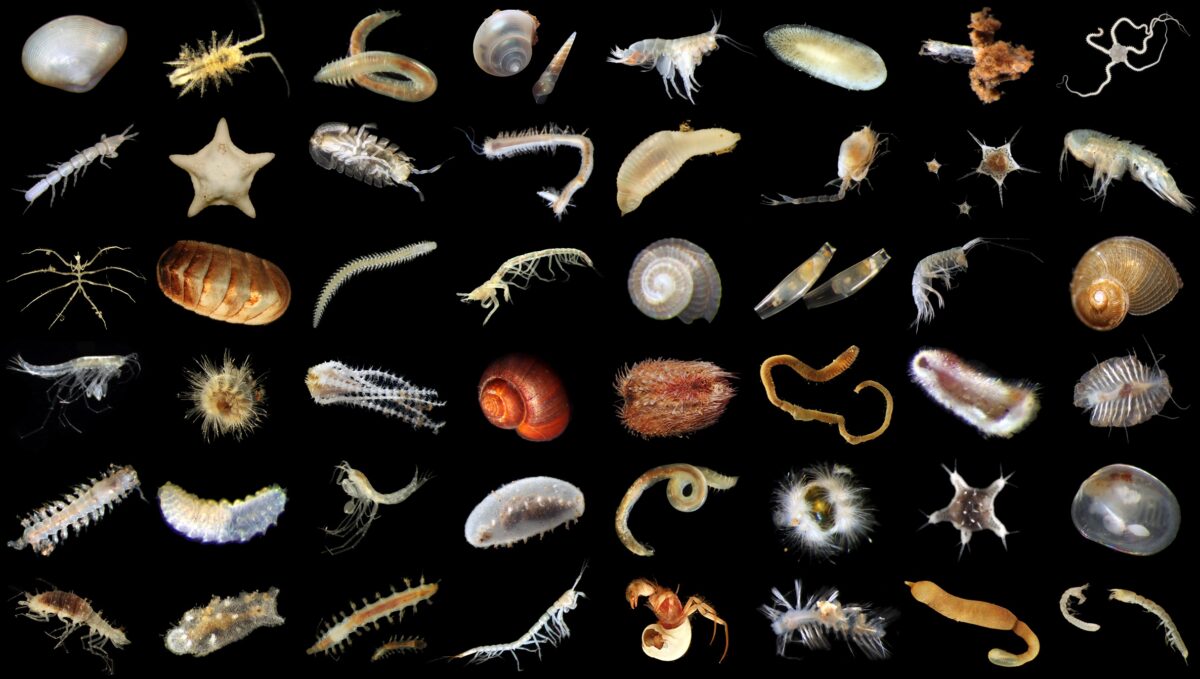
Deep in the Pacific Ocean, over 1500 kilometres from land, lies a huge field of potato-shaped rocks which hold the minerals needed to make the batteries which fuel our lives. However, living on and around these rocks are thousands of deep-sea creatures which could be impacted if we choose to mine them. The parts of the ocean being explored for deep-sea mining are in areas beyond national jurisdiction, meaning they are considered to be the ‘common heritage of mankind’. In other words, they belong to all of us, and we should all be able to make informed choices about how they are used. My lecture will highlight the connections between the deep sea and our society, including the variety of benefits it provides and how things we take for granted (cars, phones, computers) can directly impact these environments many thousands of miles from us.
Are there any specific methods you will use to make this engaging to your audience?
We’re still in the early stages of planning our lectures but I’m hoping to engage people with some amazing video footage we’ve captured in the last few years of deep-sea animals in their natural environment, alongside some specimens from our collections. I think seeing these animals in real life can really help people connect with them.
What’s the one meaningful change you’d hope to see for yourself, your community, or the wider world from your involvement in the British Science Festival?
I would love for people to leave my lecture feeling more connected to the deepest parts of our planet and with an appreciation of the fact that the ocean does belong to all of us and the beautiful and weird creatures which call it home.
You can find out more about the Award Lectures, and how you can attend, in the BSF Programme which will be out in July and will be publicised on SUSSED and the Staff Digest.
For more information on the British Science Festival:
British Science Festival Southampton 2026 – Host university information
Award Lectures – British Science Association
For further information and support with Public Engagement:
Public Engagement with Research unit SharePoint
Share this article on social media: