Reducing the environmental impact of our laboratories
The School of Geography and Environmental Science recently hosted delegates for the LEAF (Laboratory Efficiency Assessment Framework) South Coast meeting. LEAF is a tool used by university laboratories to reduce their environmental impact. Labs at our University are encouraged to engage with this as part of the University Sustainability Strategy.
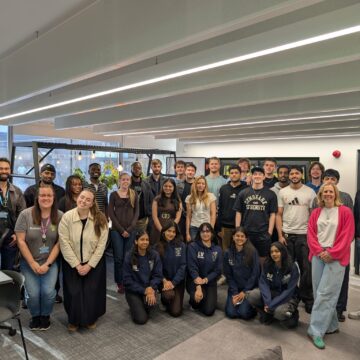
The event comprised workshops on some of the LEAF criteria including how labs can plan to reduce their environmental impact under normal, abnormal and emergency operating conditions. Making cold storage facilities more environmentally friendly and addressing the carbon footprint of procuring lab supplies. A workshop on the LEAF calculators exemplified how labs can measure their environmental impact and track the impact of changes made to operating procedures.
Organised by Peter Morgan the Sustainability Implementation group representative for Technical Staff and Laboratories. Peter says: “When I reflect on starting to use LEAF in 2021 because I thought it important for my lab, the uptake of this tool has been considerable. It’s now embedded in the University sustainability strategy and being used by 74 labs across the University, this growth shows how many colleagues see its value for addressing the sustainability of their work.”

One theme that ran throughout the day was the importance of developing real culture change in implementing LEAF to enhance sustainability, with lab users of all staff groups and student cohorts engaging with the framework and working together to achieve our sustainability goals.
Caitlin Broadbent, Sustainable Research Officer at University College London, delivered the training session. Delegates from the National Oceanography Centre and the University of Portsmouth also attended, providing a great opportunity to connect and share experiences across institutions.

“I thoroughly enjoyed joining staff from Southampton University for a day of LEAF – starting with Auditor training which will enable trainees to audit LEAF submissions, followed by a workshop on tackling criteria starting with how to approach an action in your lab and ending with how to write a detailed answer that showcases your efforts and impact. We finished the day with a LEAF calculator tutorial, explaining how to use them and what the values could show you in terms of where to focus your efforts. Southampton also kindly hosted colleagues from National Oceanography Centre and University of Portsmouth, also LEAF users, and we hope this relationship can develop and deepen, allowing all organisations to share best practice and ideas on how to make research more sustainable.
Caitlin continued: “It was a gorgeous day for it, and exploring the beautiful and green campus at lunch really reminded me why we’re doing this, to reduce the environmental impact of research to safeguard this planet for future generations.”

Phil Horton of University of Portsmouth said: “Members of the sustainability team from the University of Portsmouth were pleased to be invited to the event. It was a great opportunity, as we are just starting on our LEAF journey, to engage with other universities and to hear about common issues and approaches to achieving environmental improvements. The presentations from Caitlin gave us confidence to proceed with our first audit and accreditation, and we look forward to working with others to put in place a South Coast audit verification system.”
Dr Emma Reeves in Geography and Environmental Science at our University says: “After attending the excellent LEAF Auditor training, I gained a deeper understanding of the LEAF auditing framework and how to use it to generate working practices that are more environmentally responsible. I aim to use the LEAF auditing framework to expand our lab inductions to ensure that lab users are trained to be aware of the impact of their lab work on the environment right from the beginning of their lab experience at the University of Southampton.”

To learn more about sustainable labs at University of Southampton visit our SharePoint page, join our Teams or contact Peter Morgan.
For more information on the wider University Sustainability Strategy, please visit the Sustainability Strategic Plan SharePoint or refer to the latest University of Southampton Annual Sustainability Report.
Share this article to social media: